
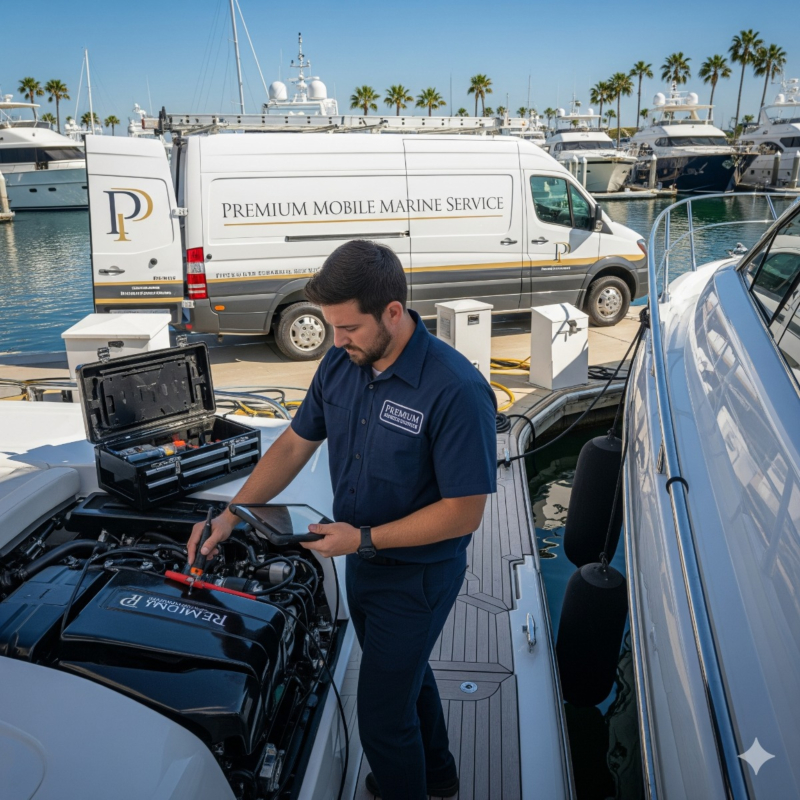
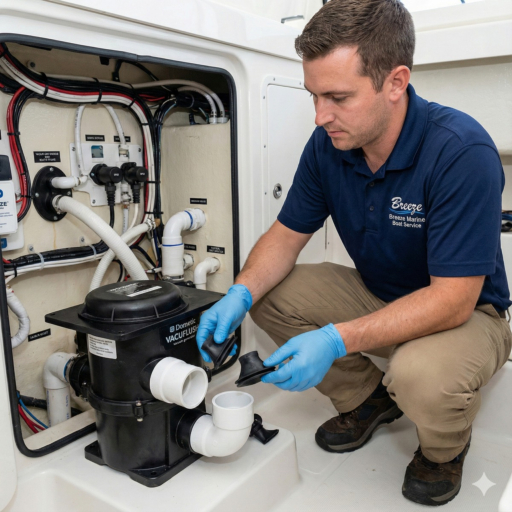
Few sounds on a boat are as familiar to VacuFlush owners as the pump kicking on for a few seconds in the middle of the night when nobody has flushed. It drains batteries, wakes guests and signals that the system is losing vacuum somewhere. The fix is usually a set of seals or valves, but finding which one first saves time and parts.
How a vacuum toilet system works
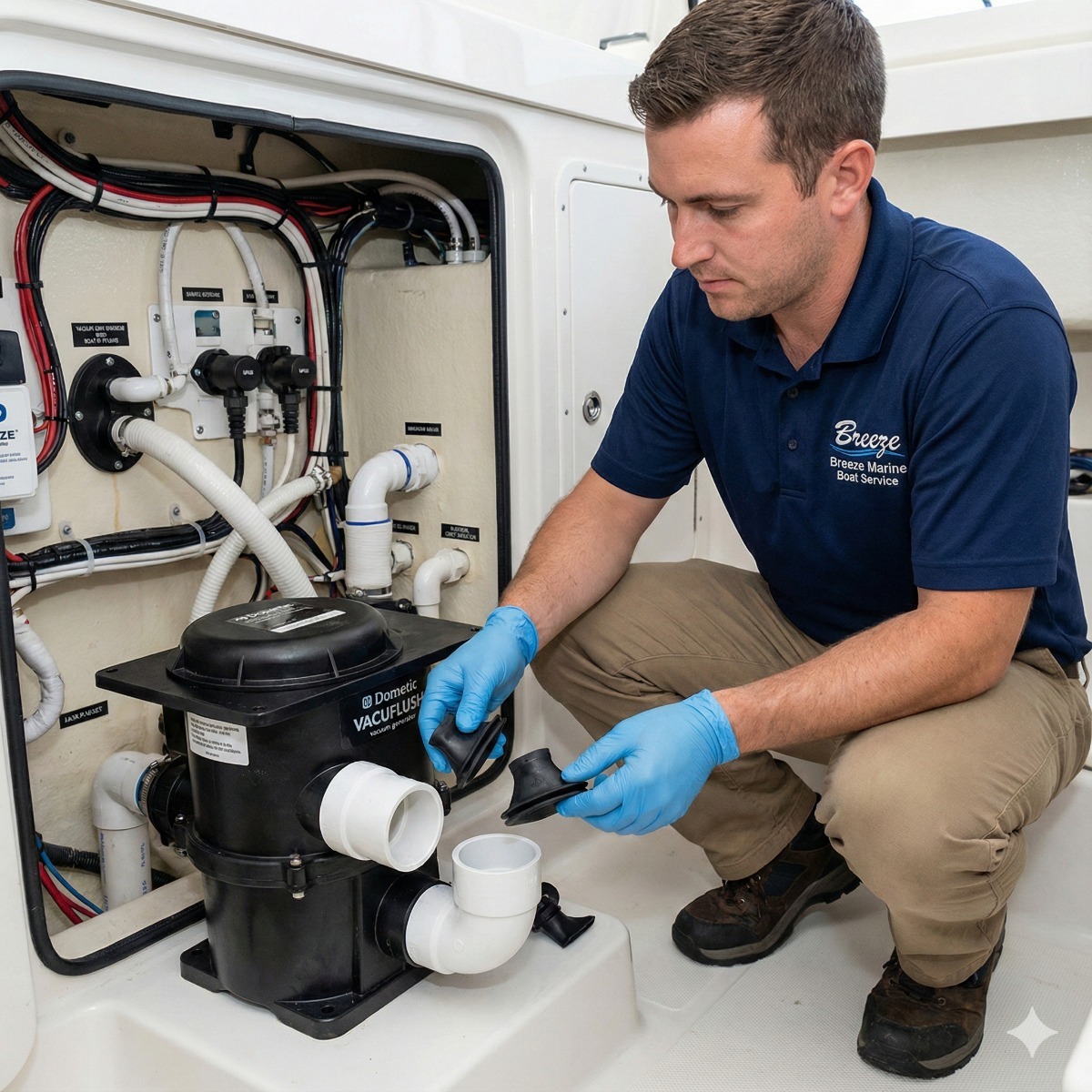
A VacuFlush system uses a pump, called the vacuum generator, to pull a vacuum in the discharge line and a vacuum tank or accumulator. When you flush, a ball valve at the bottom of the bowl opens and the vacuum pulls waste through to the holding tank. A switch monitors vacuum level and starts the pump when it drops. In a healthy system the vacuum holds for hours or days, so the pump only runs after a flush.
Why vacuum pump cycling happens
Vacuum pump cycling without use means air is getting in. The common entry points are:
- The bowl seal at the ball valve, which lets air in when it hardens, gets scratched or holds debris. A telltale sign is a bowl that slowly drains when it should hold water.
- Duckbill valves in the vacuum generator, which stiffen and stop closing fully, allowing air to flow back.
- Hose connections and clamps along the discharge line, particularly near fittings and the tank.
- The vacuum switch or its hose, which can give false readings if cracked.
Narrowing down the vacuum leak
A structured approach isolates sections of the system. First, check whether water stays in the bowl. If the bowl empties, the seal at the ball valve is almost certainly part of the problem. Next, a technician can install a vacuum gauge and close or clamp the line at different points to see which section loses vacuum. If the pump side holds and the bowl side does not, the leak is at the toilet or the line leading from it. If the pump side itself leaks down, the duckbill valves or pump housing are suspect.
Listening also helps. A faint hiss at the base of the toilet or at a fitting can point directly to a vacuum leak.
What the repair involves
Bowl and ball valve
The toilet base is opened, the ball and its seat are cleaned, and the bowl seal and related gaskets are replaced with a marine toilet seal kit designed for the model. Mineral deposits on the ball can prevent a seal even with new rubber, so cleaning is part of the job.
Vacuum generator
Duckbill valve replacement is the most common pump-side repair. The pump is opened, the chambers cleaned, and all duckbills replaced as a set. Worn bellows or diaphragm components are replaced at the same time if they show cracks.
Lines and fittings
Old sanitation hose can become permeable and odorous. Clamps are checked, and any hose that is cracked, hard or smelly is replaced with proper sanitation hose.
After work, the system is pumped down and monitored to confirm the vacuum builds quickly and holds without the pump restarting.
Owner checks and good habits
- Fill the bowl and see if the water level drops over an hour.
- Look for toilet paper or hair caught under the seal and clean gently.
- Use only marine-safe cleaners, since harsh chemicals shorten seal life.
- Avoid flushing anything other than waste and marine toilet paper.
- Note how often the pump cycles and whether it has changed over time.
These steps cover most of the basics of sealand toilet troubleshooting, since SeaLand and Dometic share the same system design. When the simple checks do not stop the cycling, a structured VacuFlush repair and seal replacement service tests each section of the system and replaces worn parts.
When to call a technician
Call for marine toilet repair if the pump runs continuously, the toilet will not build vacuum at all, you notice sewage odor near hoses or the pump itself leaks. Dometic toilet repair often includes checking the vacuum switch and wiring, since a faulty switch can mimic a leak.
VacuFlush FAQ
How often should duckbill valves be replaced?
Many owners replace them every few seasons as preventive maintenance, or sooner when cycling begins. Hard water and infrequent use can shorten their life.
Why does my toilet bowl drain by itself?
Water draining from the bowl almost always means the bowl seal is not sealing, due to wear, deposits or debris on the ball.
Can a vacuum leak drain my batteries?
Yes. Frequent pump cycling adds up, especially at anchor with no charging source.