
Most boats sit unattended far more than they run, and during those quiet days the only thing watching the bilge is a small switch mounted near the lowest point of the hull. When rainwater, a dripping shaft seal or a loose hose clamp lets water in, that switch decides whether the pump starts. This guide explains how the switch works, why it fails, how to check it yourself and when it makes sense to have it replaced.
What the Float Switch Actually Does
A bilge pump has no way of knowing that water is rising. The float switch closes the circuit when the water reaches a set height and opens it again once the bilge has been pumped down. An automatic bilge pump is really two parts working together: the pump that moves the water and the switch that tells it when to run. Most installations also have a manual position on a helm panel so you can run the pump by hand, but the automatic side is the one that protects the boat while you are ashore.
Mechanical and Digital Switch Types
There are three common designs, and each behaves differently in a dirty bilge:
- Hinged float arm. A buoyant arm lifts with the water and closes a contact inside. It is simple and inexpensive, but debris, hair and oily sludge can hold the arm down or prop it up.
- Enclosed or guarded float. The moving part sits inside a cage or housing, which keeps larger debris away from it.
- Digital float switch. Electronic sensing detects water without any moving parts, so there is nothing to jam. These usually cost more but tolerate a messy bilge far better.
Common Causes of Float Switch Failure
In practice, float switch failure rarely has a mysterious cause. The usual suspects are:
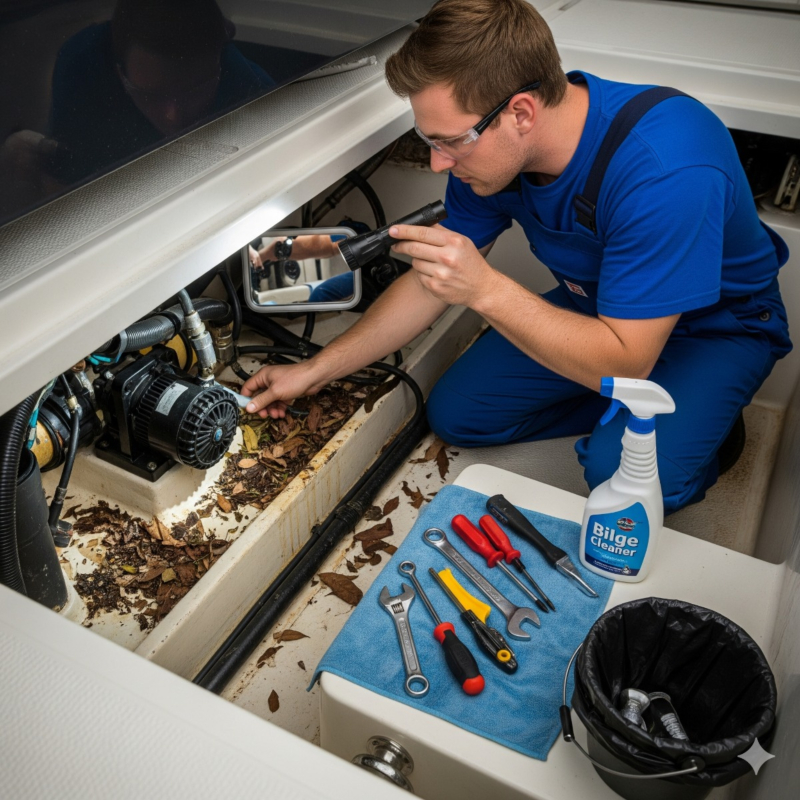
- Debris or sludge jamming a mechanical arm in the down position.
- Corroded splices where the switch leads join the boat wiring, often visible as green powder on the copper.
- A switch that has come loose from its mount and tipped over, so the float no longer moves freely.
- Oil in the bilge coating the float or the sensor.
- Simple age: internal contacts wear out after years of cycling.
Warning Signs to Watch For
The most obvious sign is a bilge pump not turning on even though there is standing water around the switch. Others are quieter: a pump that runs constantly because the arm is stuck up, a pump that only works in the manual position, or a pump that cycles on and off every few minutes, which can point to a leak rather than a switch fault. A blown fuse on the bilge circuit is another clue that something in the switch or its wiring is shorting.
How to Test a Bilge Pump Float Switch
You can test a bilge pump float switch in a few minutes without tools:
- Check that the battery supplying the bilge circuit is charged and the fuse is intact.
- Lift a mechanical float gently by hand. The pump should start within a second or two and stop when you let go.
- For a digital switch, pour a bucket of water into the bilge until the sensor is covered, then watch for the pump to start and stop.
- Try the manual position on the helm panel. If the pump runs manually but not automatically, the bilge pump switch or its wiring is the likely problem.
Never trust a switch that only works after you tap it. That intermittent behavior usually gets worse, not better.
Why Bilge Pump Wiring Matters
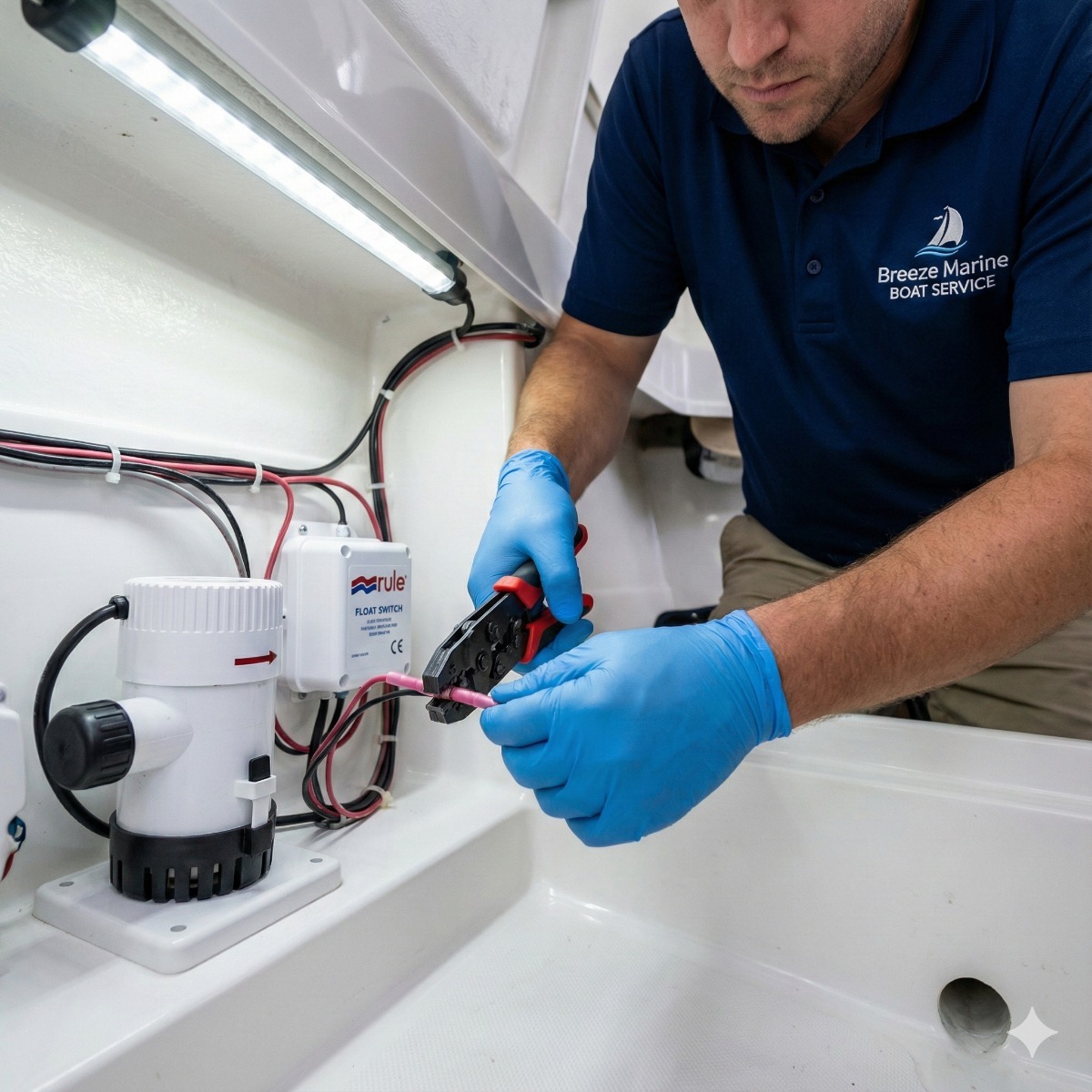
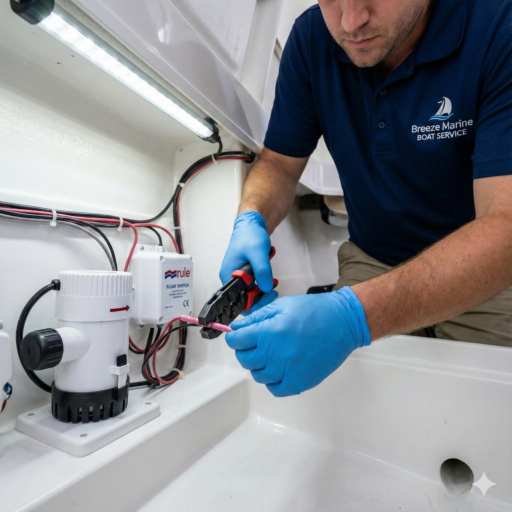
A good switch on poor bilge pump wiring is still an unreliable system. Splices in the bilge sit in damp, salty air and sometimes underwater, so twisted wires and plain crimp connectors corrode quickly. Sealed heat-shrink connectors, the correct wire gauge and a fuse sized for the pump all help. It also matters where the automatic circuit gets its power: a switch wired through the main battery switch stops protecting the boat the moment that switch is turned off, which is why the automatic side is normally connected directly to the battery with its own fuse.
When to Call a Technician
If the test fails, the connections show corrosion, or the switch sits somewhere you cannot reach safely, plan a bilge pump float switch replacement rather than a quick patch. A proper job includes cleaning the bilge around the new switch, remaking the connections with sealed terminals, mounting the switch at the right height and flooding the bilge to prove the pump starts and stops on its own. If you keep your boat in Long Beach or a nearby harbor, our automatic float switch replacement service covers those steps.
Float Switch FAQ
How long does a bilge pump float switch last?
There is no fixed lifespan. A switch in a clean, dry bilge can last many seasons, while one sitting in oily water with exposed splices may fail much sooner. Testing it every time you visit the boat is more useful than counting years.
Is a digital float switch worth the extra cost?
For bilges that collect oil, hair or debris, usually yes. With no moving arm to jam, this type removes the most common failure mode, although it still depends on sound wiring and a clean mounting spot.
Should the automatic bilge pump work with the battery switch off?
Yes. The automatic circuit should stay live when you leave the boat, which means it is normally wired directly to the battery through its own fuse instead of through the main battery switch.