Many owners think of annual engine care as an oil change. Fresh oil matters, but it is only one item on a list that engine manufacturers expect to be done every 100 hours or once a year, whichever comes first. The rest of that list covers the parts that actually strand boats: cooling, fuel, drive and corrosion protection. This guide walks through what a complete service includes and why each item is there.
Why Hours and Calendar Both Matter
Recreational boats rarely hit 100 hours in a season, so many owners assume they can stretch service out. The problem is that time does its own damage. Engine oil absorbs moisture and combustion acids while it sits. A rubber impeller bent in the same position for months takes a set and can crack on the next start. Anodes keep corroding whether the boat moves or not. That is why the annual interval applies even to low-hour engines.
What a Complete Annual Service Includes
Oil and filters
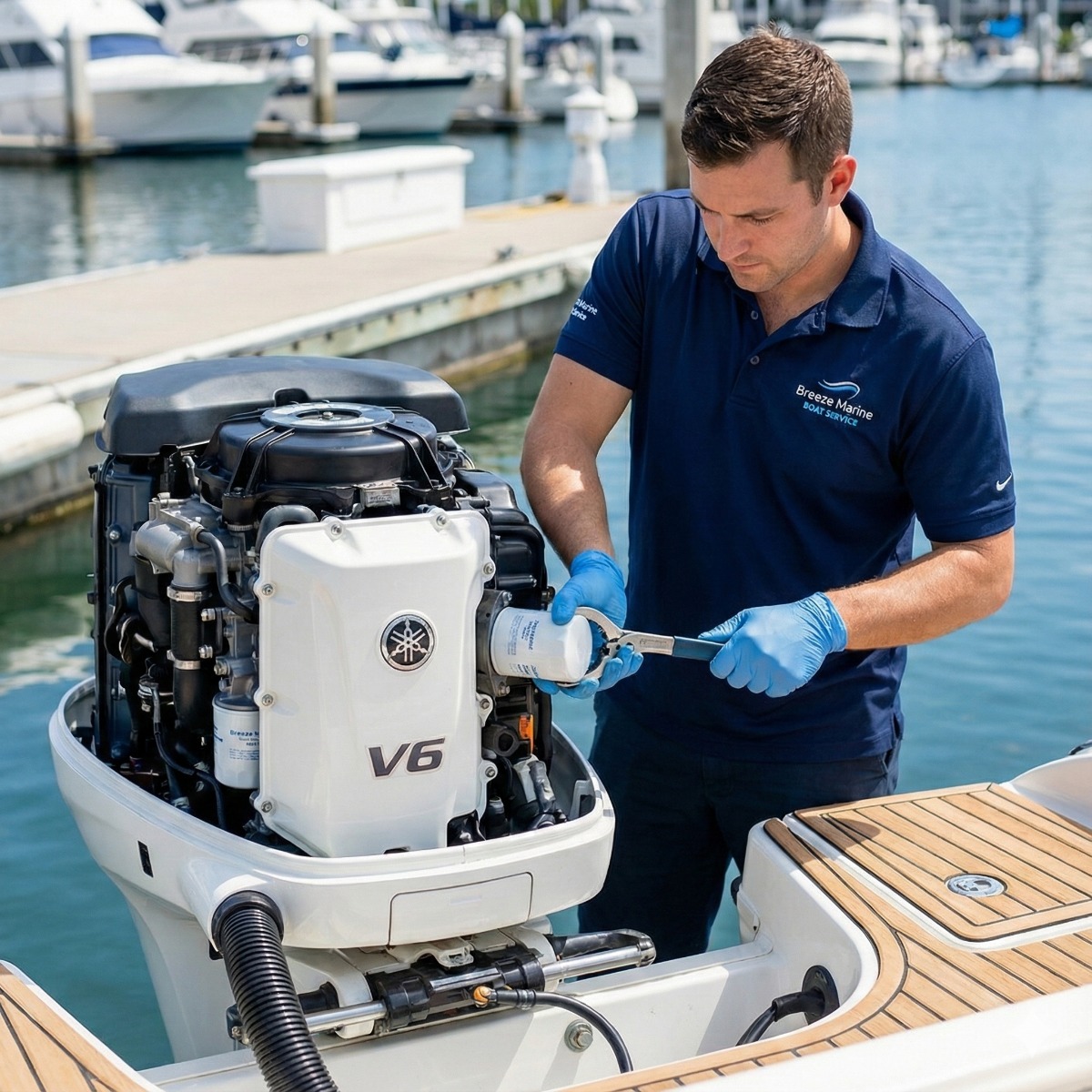
The engine oil is drained warm so contaminants come out with it, and new oil filters are fitted. The old oil is worth a look: a milky color suggests water or coolant, and a fuel smell can point to injector or carburetor problems.
Fuel system
Fuel separators, the filters that catch water and debris before they reach the engine, are replaced, and the bowls are checked for water. Engine-mounted fuel filters are changed too. Fuel hoses and clamps are inspected for cracking and leaks.
Cooling system
The raw water pump impeller is the engine's cooling lifeline. During the service the water pump impeller is inspected or replaced, the raw water strainer is cleaned, and belts and hoses are checked. On engines with closed cooling, coolant condition and level are checked too.
Drive and gear oil
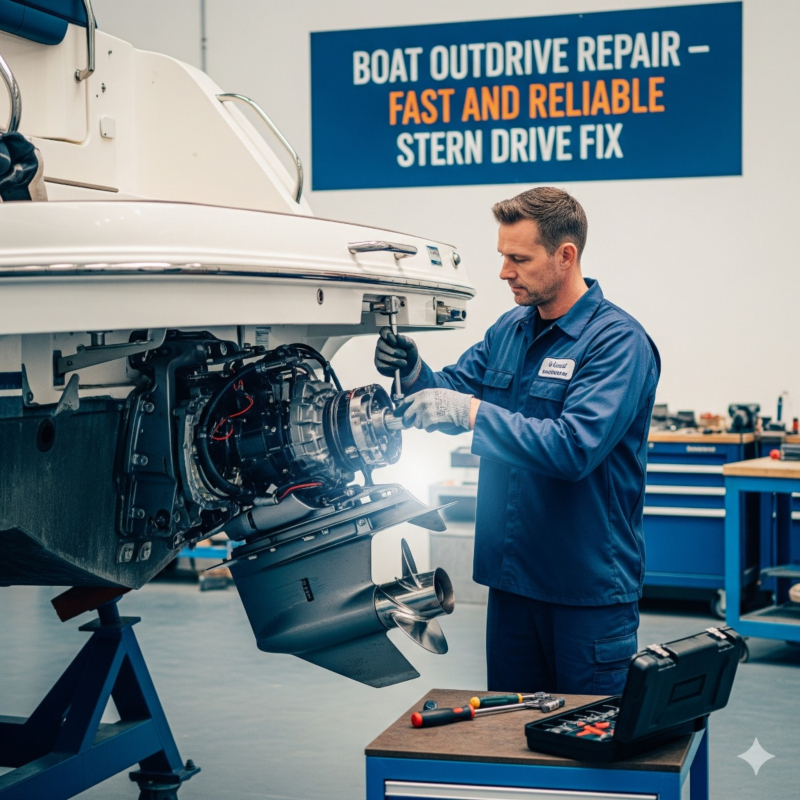
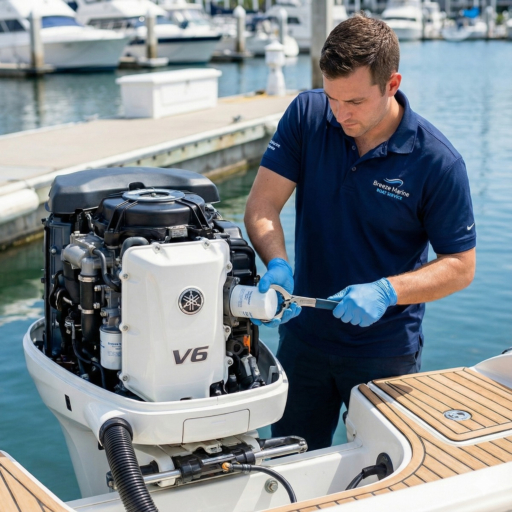
Outboards and sterndrives get fresh lower unit gear lube, and the old oil is examined for water or metal. Inboards get their transmission fluid changed or checked according to the manufacturer's schedule.
Corrosion protection
Zinc anodes on the engine, drive and trim tabs are checked and replaced when they are around half consumed. Worn anodes leave the metal of the engine and drive to corrode instead.
Electrical and controls
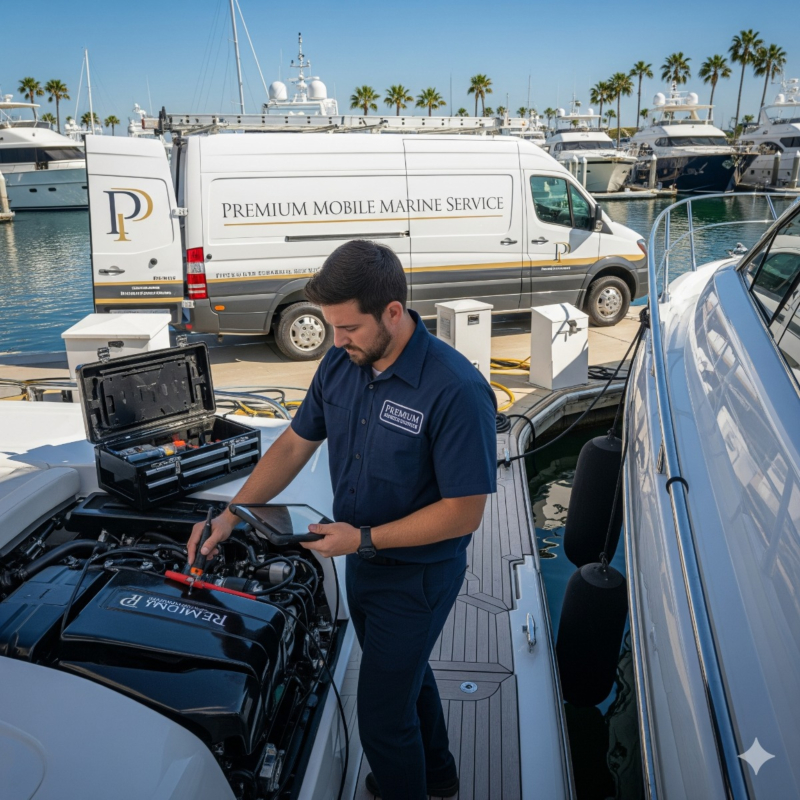
Battery connections, charging output, spark plugs on gasoline engines, and shift and throttle cables are checked. Electronically controlled engines are scanned for stored fault codes.
Test run
The engine is run to check oil pressure, operating temperature, charging voltage and leaks before the work is signed off.
Oil Change or Full Service?
A mobile boat oil change is convenient and useful between services, especially for boats that run many hours. But oil alone leaves the impeller, fuel, drive and anodes unchecked, and those are the items behind most breakdowns. If the boat has not had a complete service in the past year, it is worth doing everything at once rather than piecemeal.
What an Owner Can Check Before the Service
- Note the current engine hours and the date of the last service.
- Write down anything unusual from the season: overheating, alarms, hard starting, smoke or vibration.
- Look at the fuel separator bowl for water.
- Check the telltale stream on outboards for strong, steady flow.
- Find your service records so the technician knows what was replaced last time.
Keeping Records
Service records are more than paperwork. They help with warranty claims, support resale value and let the next technician see what was done. A proper record lists the date, engine hours, parts replaced and any findings that should be planned for later. Regular boat engine maintenance with good records also makes it easier to spot trends, such as anodes wearing faster than usual or oil consumption creeping up.
For a single visit that covers all of the items above, with a test run and a written record, see the 100-hour service and annual engine maintenance page. Booking it before the busy summer months makes scheduling easier and gets the boat ready for the season.
When to Call Between Services
Do not wait for the next scheduled 100-hour service if you notice overheating, a drop in oil pressure, water in the fuel separator, milky gear oil or a new noise. Those are signs of a problem that has started, not routine wear.
Annual Engine Service FAQ
Do I need a 100-hour service if I only ran 30 hours?
Yes. Most manufacturers specify 100 hours or one year, whichever comes first, because oil, impellers and anodes age with time as well as use.
How long does the service take?
It depends on the engine, access and what is found. Single outboards are quicker than twin inboards with generators.
Does the service need a haul-out?
Usually not. Most of the work can be done at the slip, although outdrive work on boats kept in the water can require lifting the boat.