
An engine that revs freely while the boat barely moves is one of the most confusing problems on the water. Very often the cause is a spun prop hub: the flexible insert inside the propeller that ties the blades to the shaft has let go. This guide covers how a hub works, the signs it has failed, why propellers seize on the shaft, and what propeller re-hubbing involves compared with buying a new prop.
How a Propeller Hub Works
Most outboard and stern drive propellers are not solid from bore to blade. The splined inner sleeve that slides onto the shaft is separated from the outer barrel by a cushion. Older designs use a rubber bushing pressed in under heavy force. Newer systems, such as Flo-Torq and similar kits from other makers, use a replaceable plastic or composite insert with a separate sleeve. Either way, the cushion softens shifting shock and is meant to give way in a hard impact before the gearcase does.
That protection has a cost. Heat from repeated hard launches, age and every bump against sand or rock slowly weaken the cushion until it can no longer hold full engine torque.
Signs of a Spun Prop Hub
- RPM climbs quickly while speed stays low, and the boat struggles or refuses to get on plane.
- The boat moves normally at idle but slips as soon as throttle is applied.
- A paint line drawn across the hub and barrel no longer lines up after a run.
- Performance fades over several trips rather than all at once, which points to an aging rubber prop hub.
- A burnt rubber smell, or a melted insert visible at the back of the propeller.
Similar symptoms can come from other faults, so rule them out before blaming the hub. A ventilating prop, trim set too high, damaged blades and a slipping clutch in the lower unit can all cause high rpm with poor speed.
Why Propellers Seize on the Shaft
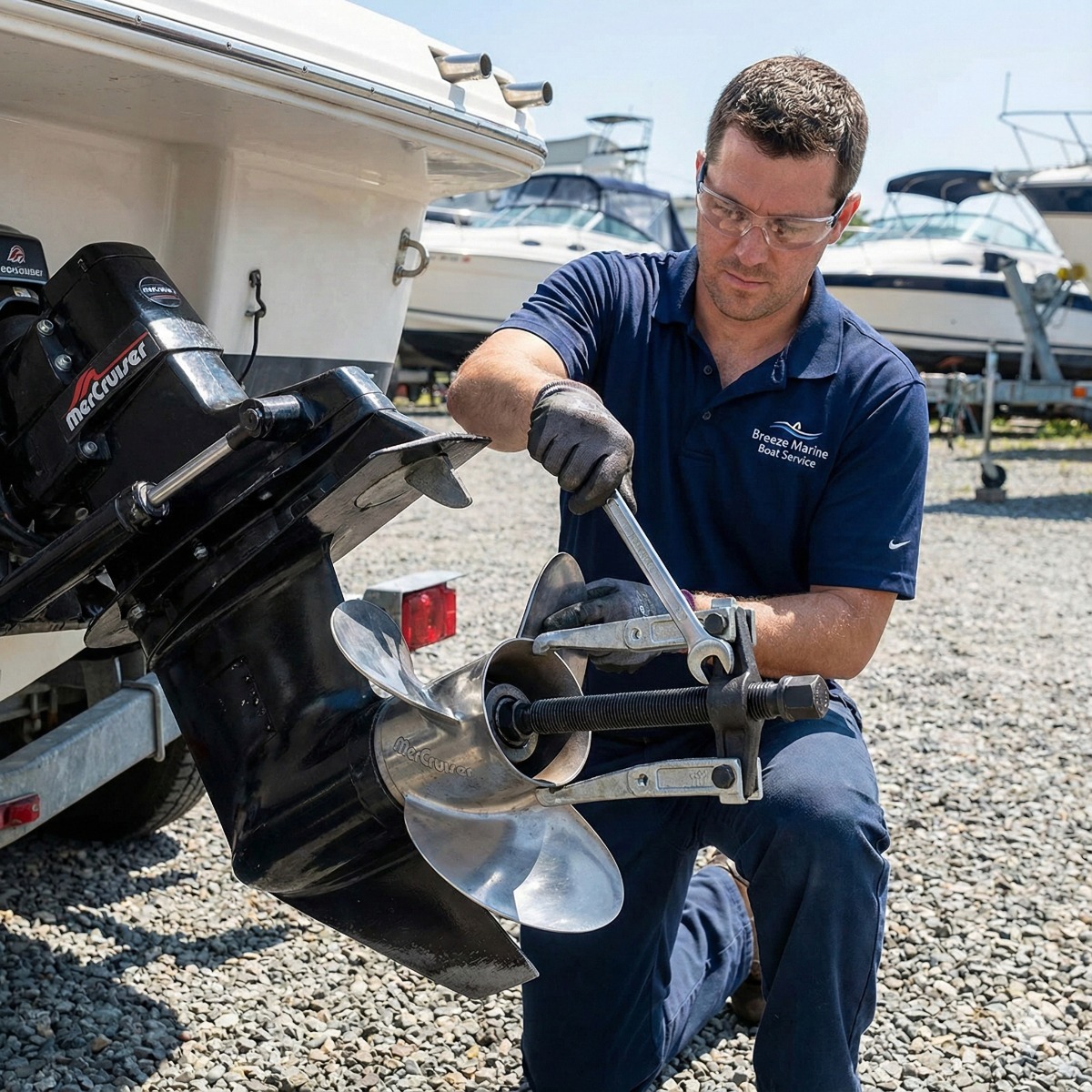
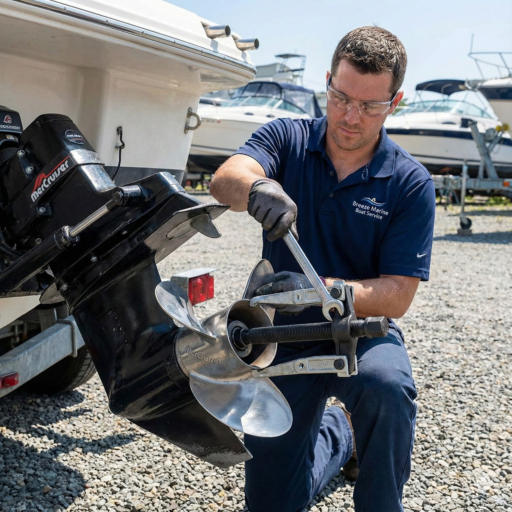
Salt water, dissimilar metals and time are a bad combination. A stainless or aluminum prop sitting on a stainless shaft can bond to it through corrosion, especially when the splines were assembled dry. Hammering on a stuck propeller is tempting, but it can bend the shaft, damage the gearcase bearings or crack the prop. The safer approach to seized propeller removal is a prop puller that grips the barrel and pushes against the shaft end, sometimes helped by penetrating oil and patience.
What an Owner Can Check
- Remove the key and disconnect the kill switch lanyard or battery before touching the propeller.
- Mark the hub and outer barrel with a paint pen, take a short run, then check whether the marks have moved apart.
- Look for fishing line wrapped behind the prop, which can cut the gearcase seal.
- Confirm the prop nut and its locking tab or cotter pin are in place and tight.
What Propeller Re-Hubbing Involves
The job starts by getting the prop off, often the hardest step on a boat that has not had its propeller removed in years. With the propeller on the bench, the technician inspects the prop shaft splines for twisting, wear or rust, the thrust washer for cracks and the shaft for straightness. Damaged splines will destroy a new hub quickly, so they have to be dealt with first.
For insert-style hubs, the old insert and sleeve come out and a matched kit goes in. A pressed rubber prop hub needs a press and the correct tooling, so it is usually handled in a shop. Before the prop goes back on, the splines get a coat of marine grease and the nut is torqued to the engine maker's figure. If the blades are otherwise sound, this kind of propeller rebuild is a practical alternative to replacement. For a stuck or slipping prop, see our propeller pulling and re-hubbing service in Long Beach.
Re-Hub or Replace the Prop?
Re-hubbing makes sense when the blades are in good shape and the prop suits the boat. Replacement is the better choice when the blades are cracked, heavily bent or worn thin, when the pitch is wrong for the load you carry, or when the barrel itself is damaged. Good boat prop repair can also include blade straightening and balancing, which is worth doing at the same time if the prop has picked up a vibration.
When to Call a Technician
Call for help if the prop will not come off with ordinary hand tools, if the paint-line test shows slipping, or if the boat lost drive after striking something. An impact strong enough to spin a hub can also bend the shaft or damage gears in the lower unit, so a spun prop hub after a grounding deserves a full check rather than just a new insert. Idling back to the dock is usually possible, but pushing the throttle on a slipping hub builds heat that can melt the insert and damage the shaft.
Prop Hub FAQ
How long does a propeller hub last?
There is no fixed interval. Hubs fail from impact, heat and age, and rubber hardens over the years. Checking the hub whenever the prop comes off for service is the easiest way to catch wear early.
Can I use a hammer to remove a stuck prop?
It is best avoided, because shock loads can bend the shaft or damage gearcase bearings. A proper prop puller spreads the force evenly and is much kinder to the drive.
Should I grease the prop shaft splines?
Yes. A thin coat of marine grease on the prop shaft splines each time the prop is installed makes the next removal far easier and slows corrosion between the shaft and hub.