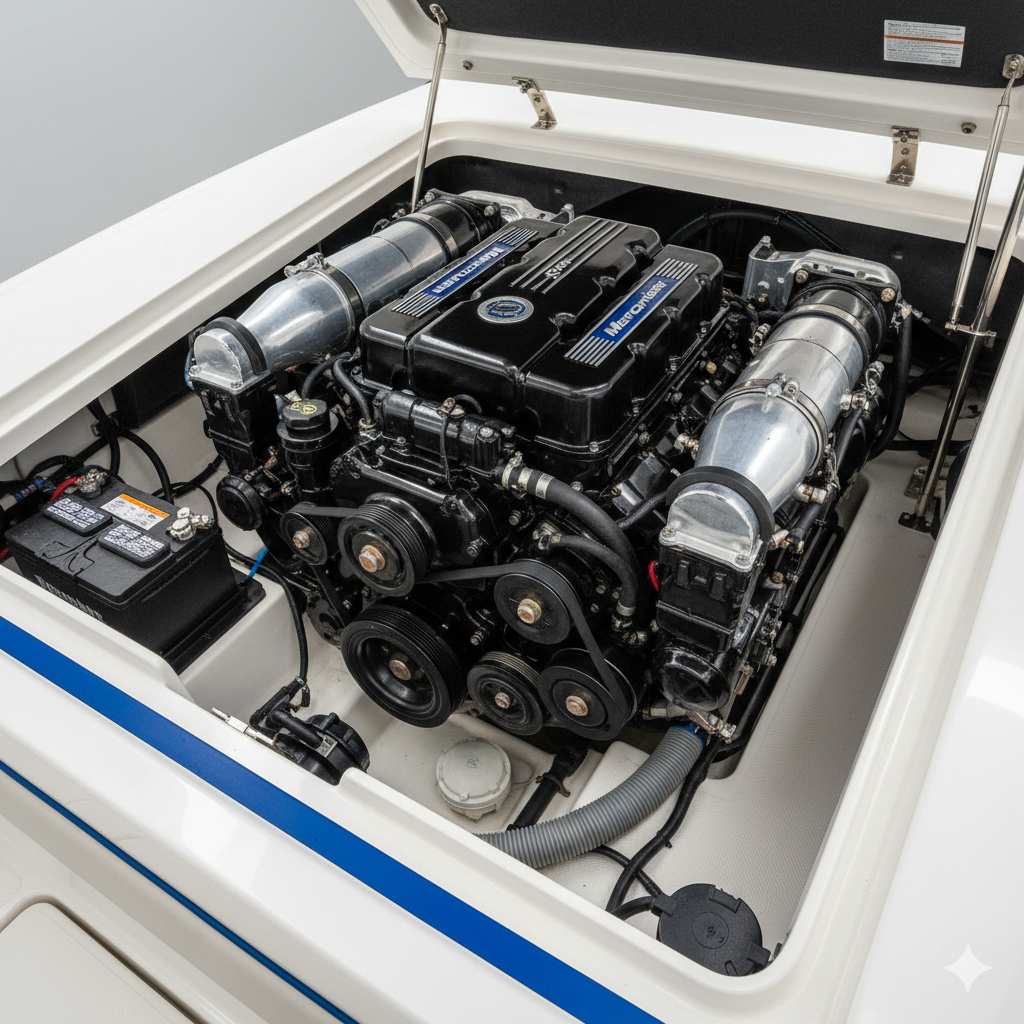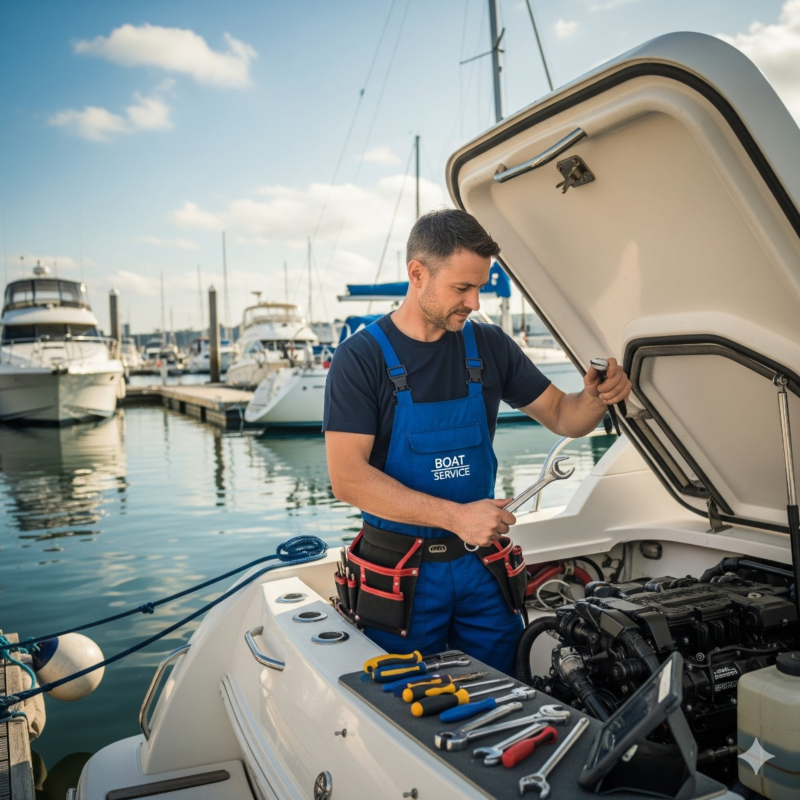

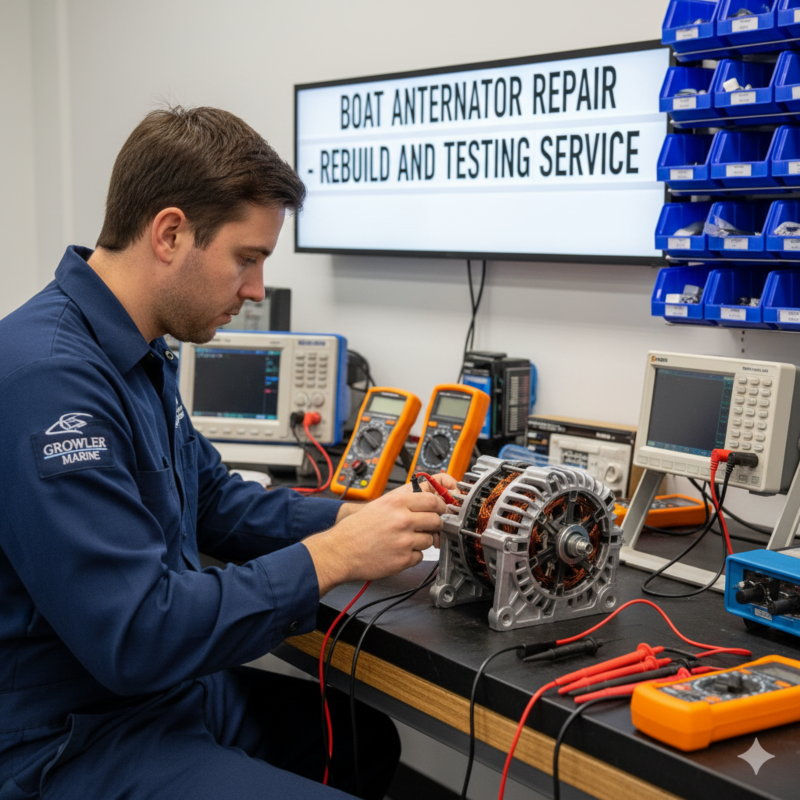

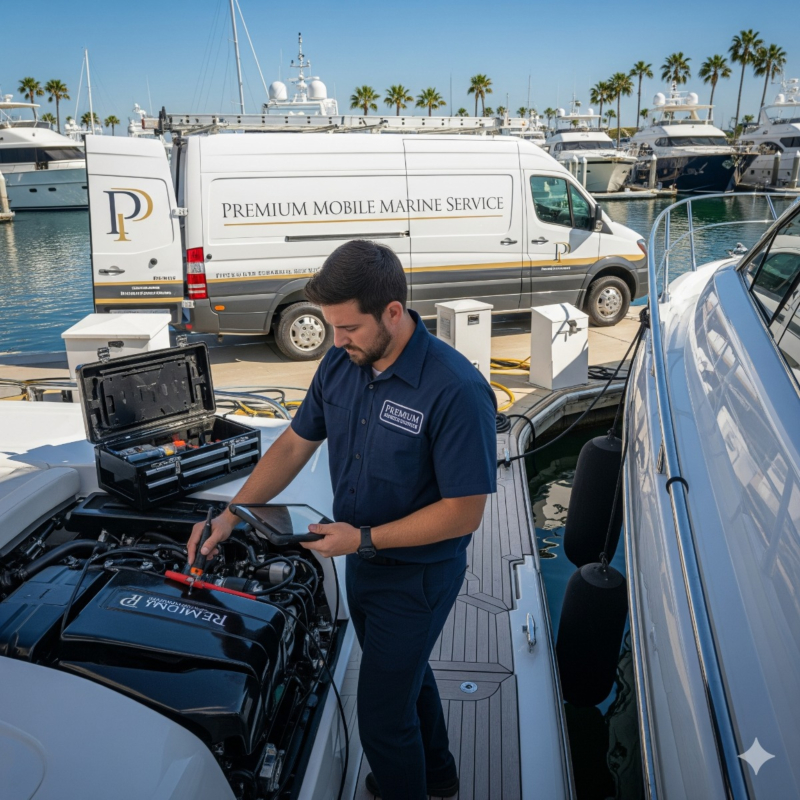
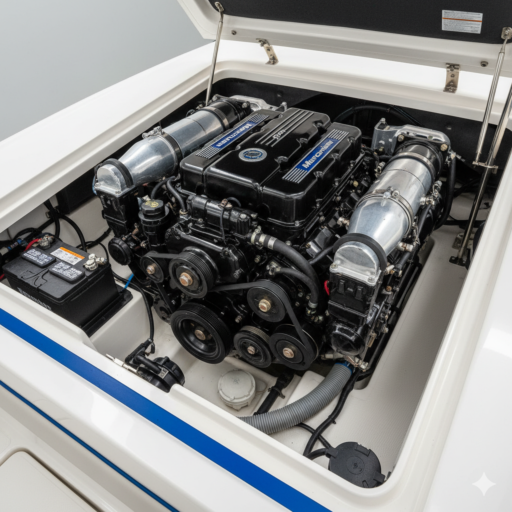
Fuel-injected Mercruiser engines and modern Mercury outboards are managed by an engine control module that constantly watches sensors and records faults. When a warning horn sounds or the engine drops into reduced power, that module usually knows why. Reading it properly is the difference between a targeted repair and an afternoon of guesswork.
What the ECM records
The engine control module, often called the ECM or PCM, monitors engine temperature, oil pressure, manifold pressure, throttle position, knock sensors, fuel pressure on some models, and more. When a reading goes outside its expected range, the module stores a fault code and may trigger an alarm or Guardian mode, which limits power to protect the engine.
Many faults are stored even after the alarm stops. That history is valuable: it shows whether a problem has happened once or repeatedly, and under what conditions. MerCruiser ECM services start by connecting diagnostic software to read active and stored faults, view live data and run tests on individual components.
How SmartCraft data helps
SmartCraft is Mercury's digital network linking engines, gauges and controls. On boats with digital throttle and shift, the controls themselves send signals over that network. A scan can reveal whether a fault lies in the engine, the helm controls, the wiring between them or a gauge. Live data also lets a technician watch temperatures, pressures and sensor voltages while the engine runs, which is often how intermittent faults are caught.
Common patterns a scan points to
- Overheat alarms: may come from a real cooling restriction, a failing temperature sensor or a wiring fault. Live data and an infrared thermometer tell them apart.
- Low oil pressure warnings: a failing sender is common, but a mechanical gauge test is needed before assuming the engine is fine.
- Misfire or knock codes: often point to ignition components, fuel quality or a single injector.
- Throttle and shift faults: can be control-head calibration, harness connections or actuators on the engine.
A code is a starting point, not a verdict. A good MerCruiser mechanic uses the code to decide what to test next, then confirms the fault with a meter, a gauge or a sea trial before replacing anything.
Sterndrive repair: what to watch for
The drive under the swim platform works hard in salt water. Common sterndrive repair items include bellows that crack and let water into the boat, gimbal bearings that grind when the drive is turned, U-joints that clunk, and seals that allow water into the gear oil. Milky or metallic gear oil at a service is a clear sign the drive needs attention.
A full sterndrive rebuild replaces bearings, seals and worn gears and resets the gear lash and shimming to specification. It is often a sensible choice for a drive with good castings and a known history. If the housing is badly corroded or the gear set is damaged, a replacement drive may be the better investment.
When a repower makes sense
Engines eventually reach a point where repairs no longer add up. Low compression across several cylinders, a cracked block or heads from overheating, or repeated major failures all suggest looking at a MerCruiser repower. Repowering means removing the old engine, checking engine mounts, transom assembly and exhaust, and installing a new or remanufactured engine with correct alignment and rigging. It is also a chance to update controls and gauges.
Mercury outboards and Verado models
The same diagnostic approach applies to outboards. Mercury outboard service includes reading faults, checking fuel system and cooling health, and inspecting the lower unit. A Verado outboard adds its own considerations, such as its power steering system, supercharger on earlier models and digital controls, all of which benefit from software diagnostics before parts are ordered.
What owners can do
- Note exactly which alarm sounded, what the display said and the RPM and temperature at the time.
- Keep up with scheduled service intervals for your Mercruiser engines, including impellers, gear oil and bellows inspections.
- Do not clear or ignore repeated alarms, since stored history helps diagnosis.
- Check battery condition, since low voltage can cause misleading electronic faults.
If you are searching for a mercruiser mechanic near me in the Long Beach area and want the engine scanned rather than guessed at, see the MerCruiser and Mercury engine specialist service for diagnostics, sterndrive work and repowers.
MerCruiser diagnostics FAQ
Can I read MerCruiser codes with a car scanner?
Generally not. Marine engines use their own connectors and software, and a car OBD scanner will not communicate with most MerCruiser systems.
Does a fault code mean a part has failed?
Not always. A code shows which circuit or reading was out of range. Wiring, connectors, low voltage or a real engine condition can all trigger the same code, so testing comes next.
How do I know if my drive needs a rebuild?
Water or metal in the gear oil, grinding when turning, clunks when shifting and leaking bellows are the usual signs. An inspection with a pressure and vacuum test confirms the condition.