


Boat Paint Repair
Boat paint repair in Long Beach and San Pedro: chips, scratches, worn topside paint, bottom painting and boat names. Get a written estimate.
- 5 services
- Labor $150/hr
- Trip fee from $30
- At your slip or in the shop


Boat Paint Repair in Long Beach and San Pedro
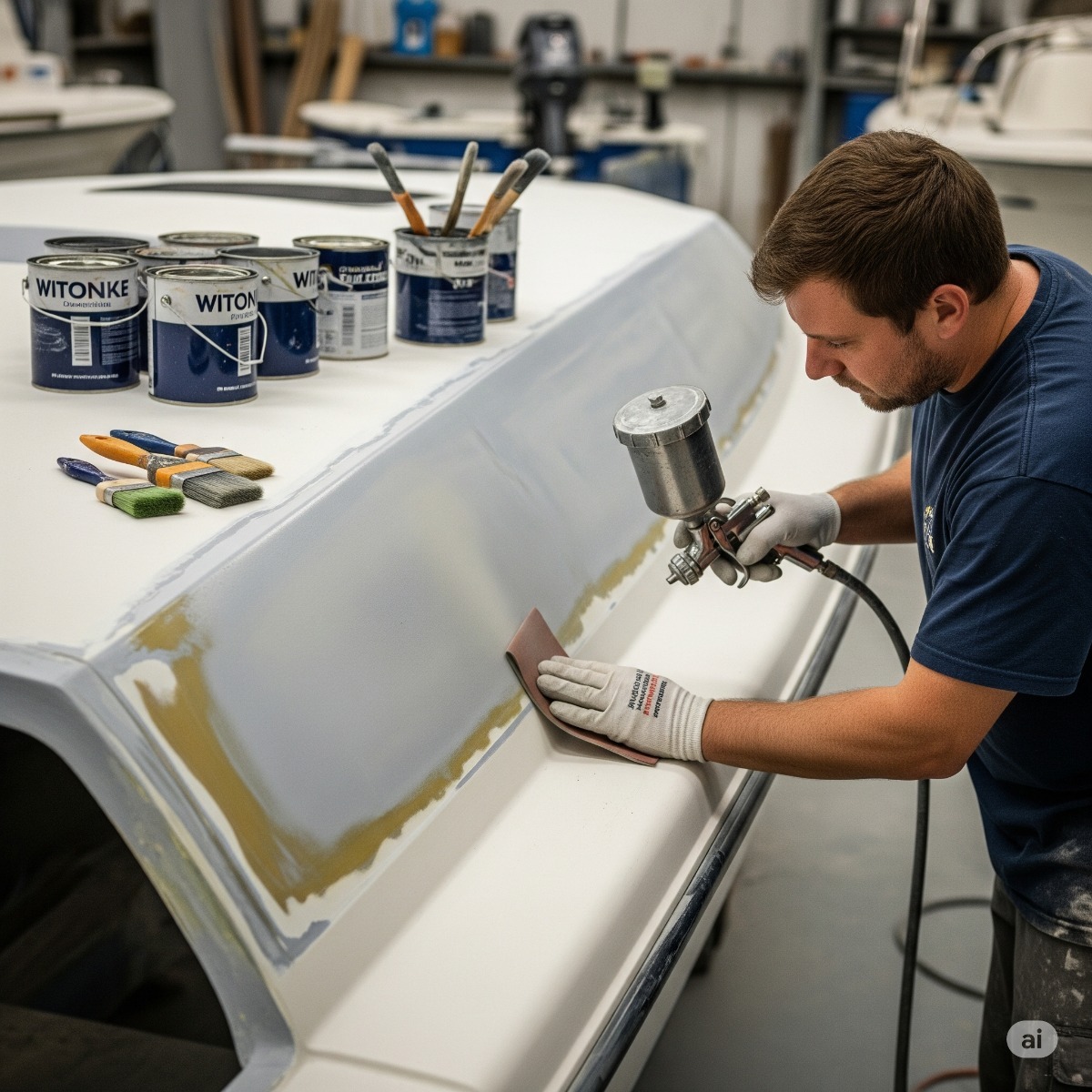
We repair chips, scratches and worn paint on boats at your slip, dock or storage yard from Marina del Rey to Newport Beach, or at our San Pedro shop. Small damage is worth fixing early, before water gets under the coating.
What the work covers
- Boat paint repair: touch-up and restoration of chips, scratches and scuffs.
- Yacht coating repair for damaged coatings on larger boats.
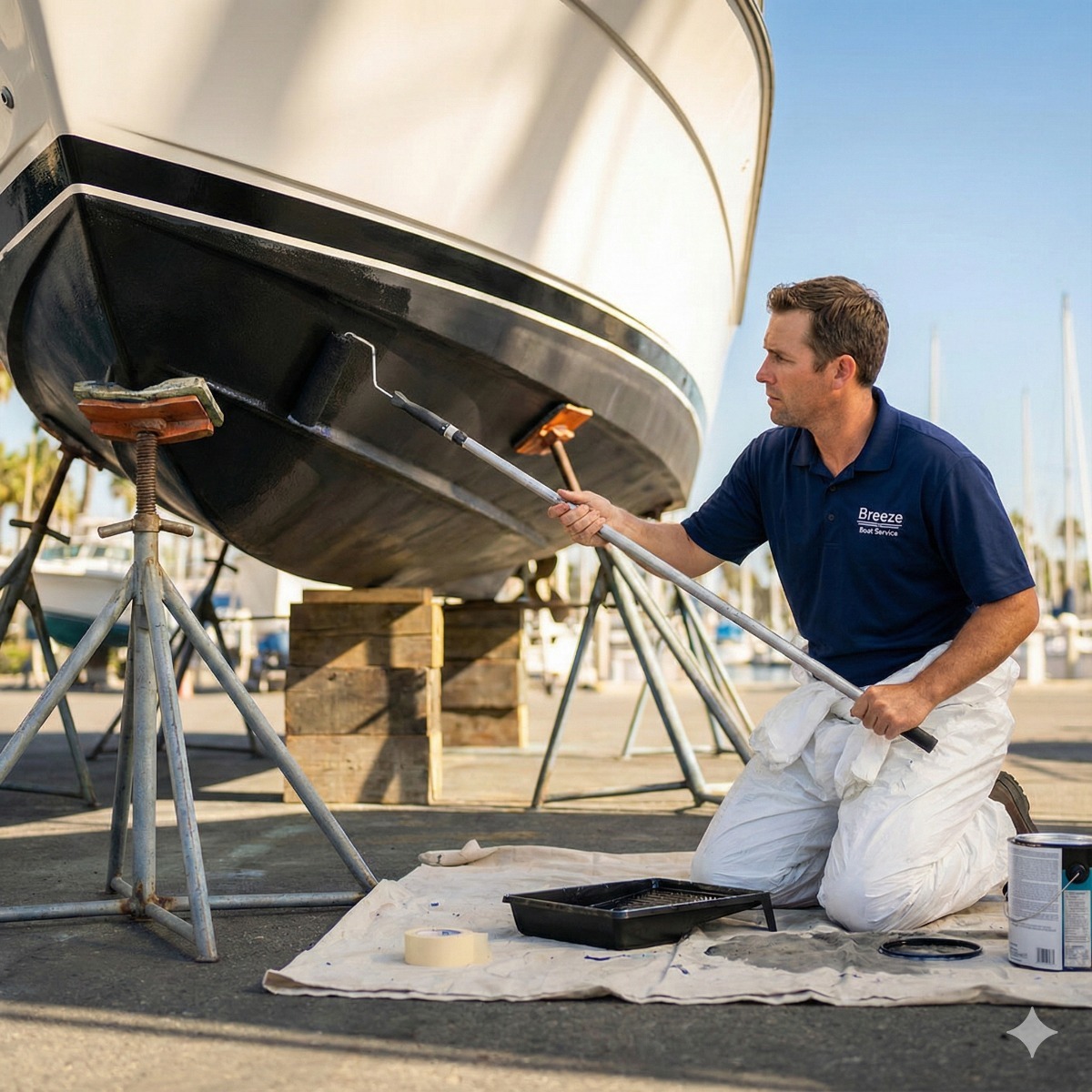
- Bottom painting and antifouling at our San Pedro shop for trailer boats up to 26 ft: $55 a foot of boat length, paint included. Bigger boats and boats in the water get a written quote, and the work is done at a boatyard.
- Marine ceramic coating and oxidation removal, plus topside polishing and waxing.
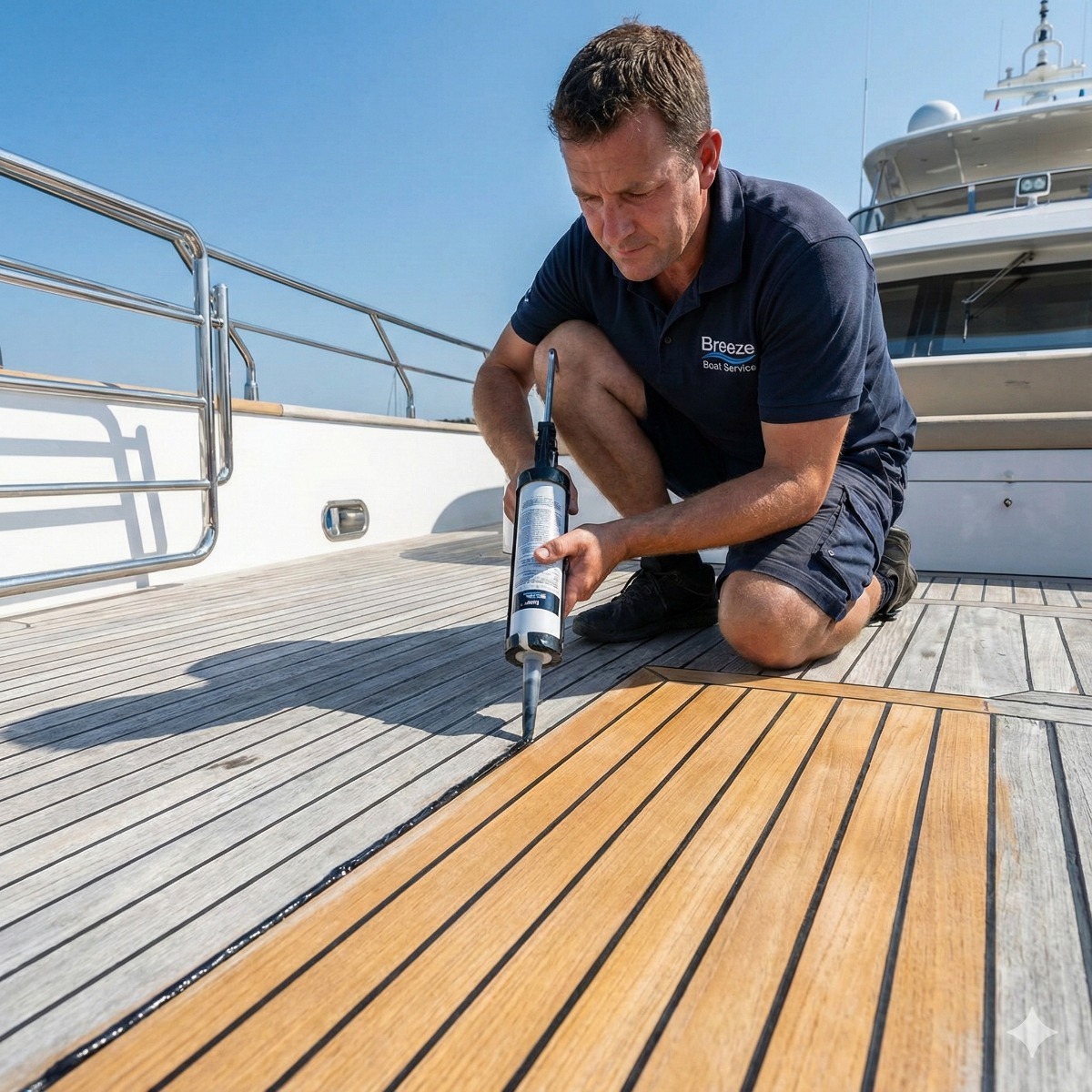
- Teak deck sanding, caulking and restoration.
- Custom boat lettering and marine graphics for the boat's name and hailing port.
Signs your paint needs attention
- Chips or scratches through the paint
- Paint that is flaking, bubbling or lifting
- Topsides that look chalky or faded
- Worn bottom paint or growth on the hull
- A faded or peeling boat name
- Gray teak or open deck seams
Questions about boat paint repair
Is my boat painted or gelcoated?
Most fiberglass boats leave the factory with a gelcoat finish, and some are painted later. The repair is different for each, so we check the finish before quoting. For gelcoat chips and cracks, see fiberglass repair.
Why fix small chips right away?
A chip lets water reach the layer underneath. Over time that can lift the paint around it or, on metal parts, start corrosion. A small repair now is simpler than a larger one later.
Book a visit: submit a ticket with the boat, where it is kept and what the damage looks like, or call (562) 542-7296.
See also: fiberglass boat repair at the slip cracks chips and leaks.
See also: dock rash on gelcoat when a scratch needs real repair.
-

#1048 Common question asks
Why does a teak deck need sanding and restoration?
-
Sun, saltwater and foot traffic turn teak grey, rough and uneven, and they crack the seams. Sanding brings back a smooth finish and the natural color, and new caulking keeps water out of the seams, which helps the deck last.
-
-
#1046 Common question asks
Can regular topside detailing improve resale value?
-
It can help. A clean, glossy finish makes a good first impression and shows a buyer the boat has been cared for, and protected gelcoat ages better.
-
-
#1044 Common question asks
Do you handle both light upkeep and heavily oxidized gelcoat?
-
Yes. A boat in good shape may only need a wash and a fresh coat of wax, while dull or chalky gelcoat needs machine polishing first, and heavy oxidation takes more polishing steps. We look at the boat first and quote the work in writing.
-
-
#1042 Common question asks
Does waxing really protect my boat’s finish?
-
Yes. Marine-grade wax creates a protective barrier against UV rays, salt and oxidation. It improves the look and slows long-term gelcoat damage, as long as it is renewed before it wears off.
-
-
#1040 Common question asks
Can polishing remove scratches and swirl marks?
-
Yes, light scratches, swirl marks, and surface imperfections can often be removed through machine polishing. Deeper scratches may require additional restoration, which we evaluate during inspection.
-
-
#1038 Common question asks
How often should topside polishing and waxing be done?
-
For a boat kept in the water and uncovered in Southern California, plan on a fresh coat of wax about every 3-4 months, and at least twice a year; covered or trailered boats can go longer. Polishing removes a thin layer of gelcoat, so we only polish when the finish has gone dull or chalky again, usually once a year or less.
-
-
#1036 Common question asks
Why does my boat’s gelcoat look dull or faded?
-
UV exposure, saltwater, and environmental contaminants break down the gelcoat over time. Polishing removes oxidation and waxing seals the surface to prevent further damage and fading.
-
-
#1034 Common question asks
What is included in topside polishing and waxing?
-
A wash to strip old wax and grime, machine polishing to remove light oxidation, then a coat of marine polymer sealant or wax. We finish with the stainless rails, the clear vinyl and the exterior seats; non-skid is cleaned, never waxed, so it keeps its grip.
-
-
#443 Common question asks
Can you create reflective, chrome, gold leaf, or illuminated lettering?
-
Yes — we offer reflective vinyl, chrome finishes, 24k gold-leaf style lettering, backlit LED boat name panels, and fully custom illuminated graphics.
-
-
#441 Common question asks
How long does marine vinyl lettering last in Southern California sun?
-
It depends on the film, the color and how much sun the boat gets; dark colors and surfaces facing the sun fade first. Good marine-grade cast vinyl lasts for years in Southern California, and the film maker's outdoor rating is the best guide.
-