
You turn the key, the batteries are fully charged, the gauges come alive, and nothing happens. No click, no crank, just silence. When a boat won't start in this way, one of the most common culprits is a small part many owners have never heard of: the boat neutral safety switch. This article explains what the switch does, why it fails, how to narrow down the fault, and when to hand the job to a technician.
What the Switch Does
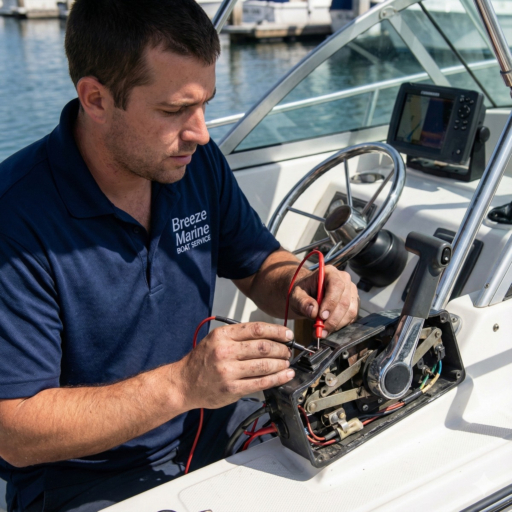
The neutral start switch, often shortened to NSS, interrupts the start signal unless the shift lever is in neutral. Its purpose is simple and important: if the engine could start in gear, the boat would lurch forward or backward the moment it fired, which can throw passengers off balance or overboard and cause collisions in a tight marina. On most boats the switch sits inside the remote control box; on some stern drives it is mounted on the engine's shift plate, and on outboards it is typically built into the binnacle control.
Electrically, it is wired in series with the small-gauge wire that energizes the starter solenoid or a slave relay. When the lever is in neutral the contacts close and the signal passes; in gear, they open.
Why It Fails
- Misadjustment: shift cables stretch and move over time, so the lever may no longer fully press the switch plunger in neutral. This is the most common cause and is usually solved with shifter cable adjustment.
- Corrosion: salt air and moisture inside the control box corrode the contacts and terminals.
- Worn contacts: after thousands of cycles, internal contacts become pitted and resistance rises.
- Wiring damage: chafed or broken wires in the harness behind the helm.
Symptoms That Point to the Switch
- Silence when turning the key, even though battery voltage is good
- The engine starts only if you jiggle the control lever or push it against the neutral detent
- Intermittent no-starts that come and go with temperature or humidity
- The engine won't crank from one helm station but does from the other on dual-station boats
By contrast, a single loud click or a slow crank usually points elsewhere in the starting system, such as the battery, the cables, the solenoid contacts or the starter motor itself.
Owner Checks Before You Call
These steps are safe for most owners and help narrow down the problem. On a gasoline boat, always make sure the engine compartment is ventilated and the blower has run before doing any electrical checks.
- Check battery voltage and the main breaker or fuses on the ignition circuit.
- Move the control lever firmly into neutral, then slightly forward and back within the detent while turning the key. If the engine suddenly cranks, the switch or its adjustment is the likely fault.
- Look at the shift cable ends at the control and at the engine for looseness, corrosion or a missing clip.
- Listen near the solenoid or relay while someone turns the key. No click at all means the signal is not reaching it.
Never bypass the switch permanently. A jumper wire that lets the engine start in gear removes a critical safety feature and creates a real hazard for everyone aboard and nearby.
How a Technician Traces the Fault
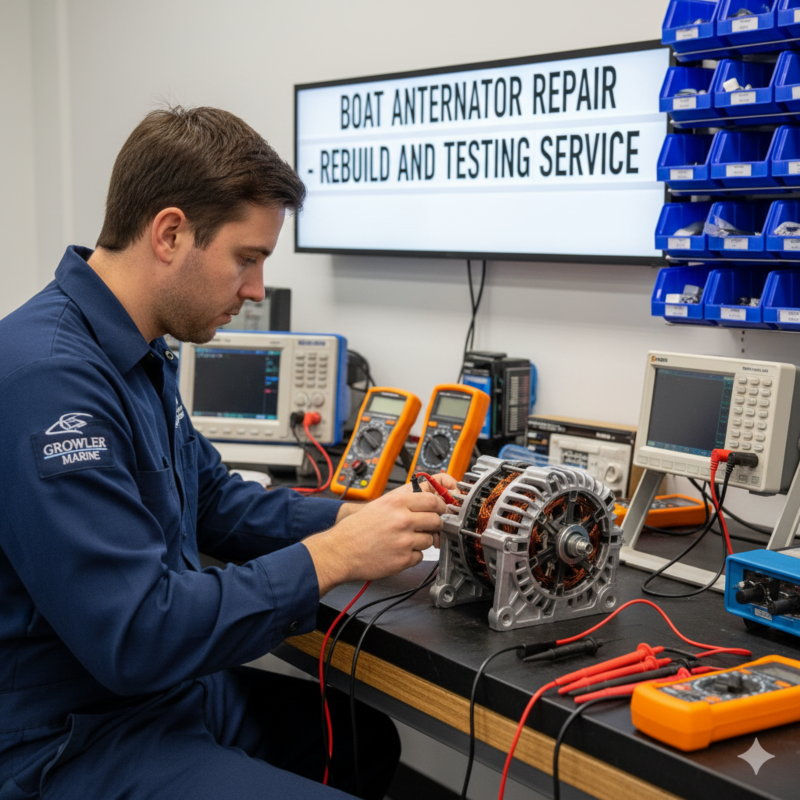
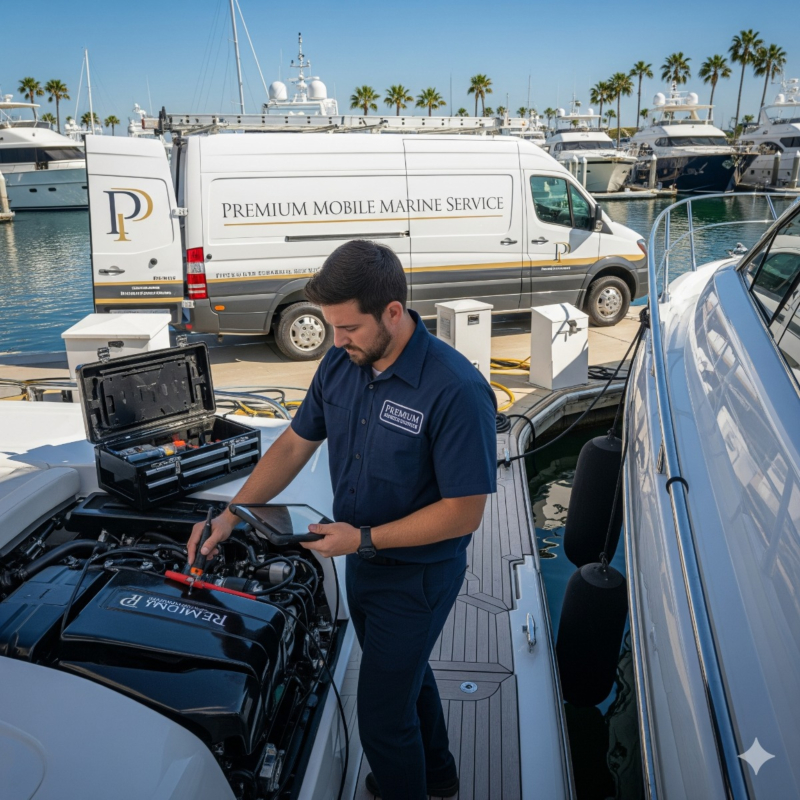
Professional neutral safety switch troubleshooting follows the start signal step by step. With a multimeter, the technician checks for voltage at the key switch output, at each side of the NSS and at the trigger terminal of the solenoid or relay. Continuity testing across the switch in neutral and in gear confirms whether it opens and closes correctly. If the switch tests good but the lever does not actuate it reliably, the cause is mechanical, and the fix is adjusting the cable or control linkage so neutral lines up with the switch plunger.
The technician also checks that shift and throttle are properly synchronized, because a misadjusted shift cable can cause more than a no-start. It can leave the gearcase partially engaged in neutral or make shifting harsh and noisy, which wears the clutch dogs in the lower unit.
Repair Options
Depending on what the testing shows, the fix may be cleaning and protecting terminals, adjusting the switch position or cables, replacing the switch itself, or repairing damaged harness wiring. On older remote controls where parts are hard to find or the internal mechanism is worn, replacing the whole control box can be the better long-term choice. After any repair, the system should be checked in neutral, forward and reverse to confirm the engine cranks only in neutral.
If you are stuck with a silent no-start, our no-start diagnosis and switch repair service traces the start circuit from the key to the starter and fixes the actual fault rather than guessing at parts.
No-Start FAQ
Can a faulty switch let the engine start in gear?
It is rare, but a switch that has been bypassed or has welded contacts can allow it. A technician can verify the circuit safely with a meter, so there is no need to test it by trying to start in gear.
Why does my boat start only when I wiggle the lever?
That is the classic sign of a neutral safety switch that is barely being actuated in neutral, usually because the shift cable or control has drifted out of adjustment.
Is this a common problem on outboards?
Yes. Outboard binnacle controls have the switch built in, and corrosion or cable wear causes the same silent no-start seen on inboards and stern drives.


