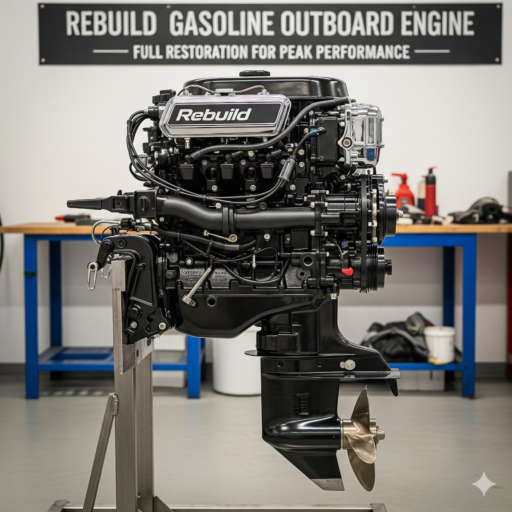
Deciding to rebuild gasoline outboard engine internals is a big step, and many owners are unsure what they are actually paying for. A proper rebuild is not simply a set of new piston rings. It is a sequence of measurements, decisions and careful reassembly, followed by tuning and a break-in period that determines how long the engine lasts. Knowing the steps helps you ask the right questions and set realistic expectations.
Signs an Outboard May Need a Rebuild
- Low or uneven compression across cylinders
- Knocking or rattling from the powerhead
- Blue smoke and oil consumption beyond normal for the engine type
- Loss of top speed that does not improve after fuel and ignition work
- Metal particles in the lower unit oil or on a spark plug
- An engine that overheated badly or ingested water
Several of these can also come from simpler faults, so a rebuild should always start with diagnosis rather than an assumption.
Step 1: Diagnosis and the Compression Test
A compression test measures how well each cylinder seals. What matters most is the spread between cylinders rather than a single number; a cylinder well below the others signals worn rings, a damaged piston, or on four-strokes a valve problem. A leak-down test can then show where pressure escapes. Pulling spark plugs and using a borescope lets the technician look at cylinder walls and piston crowns before any bolts come out.
Step 2: Teardown and Inspection
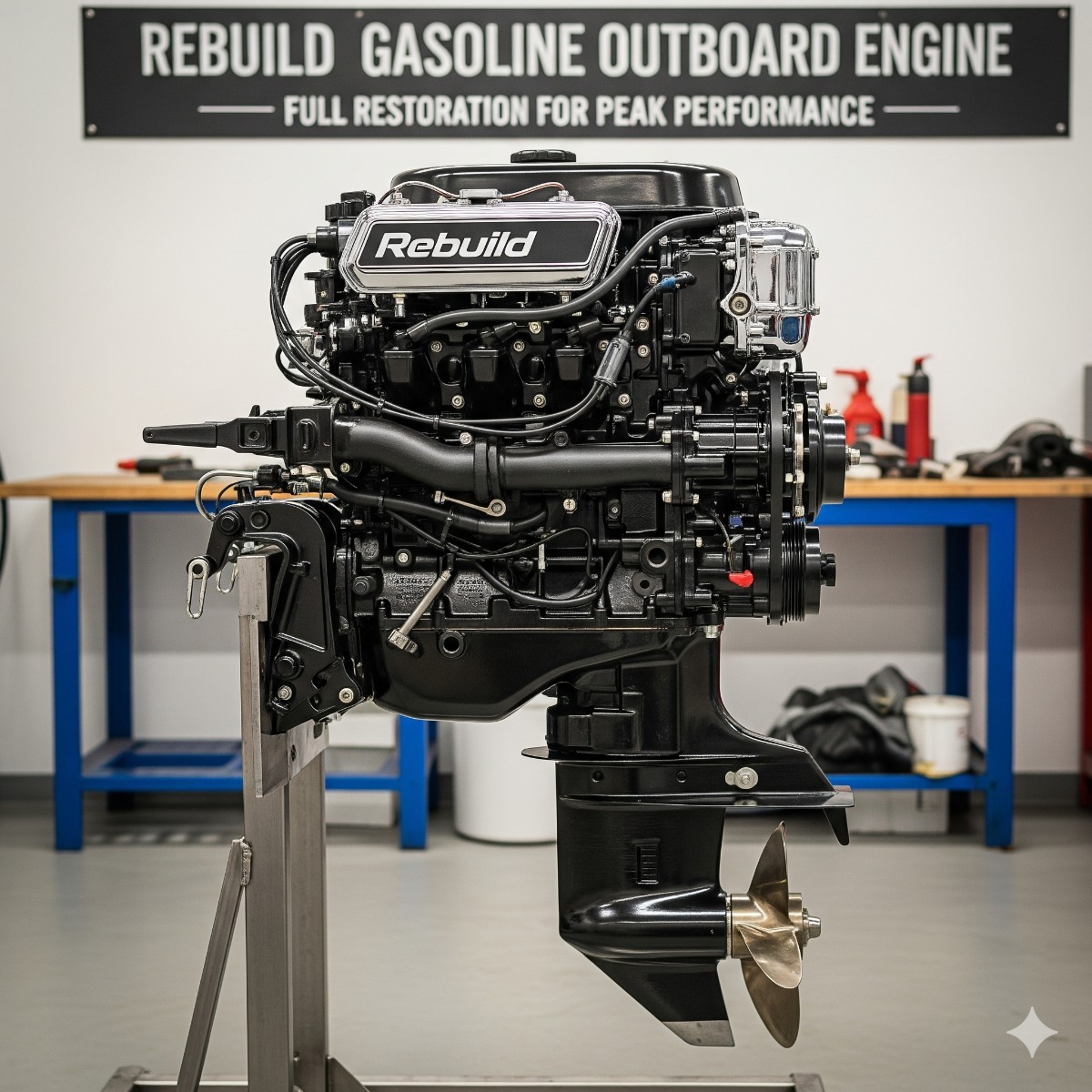
Once the powerhead is off, every part is cleaned and measured. Cylinder bores are checked for taper and out-of-round, the crankshaft for wear on journals, and bearings for pitting. On two-stroke gasoline outboards the reed valves and crankcase seals get close attention, because a leaking crankcase seal upsets the fuel mixture. On four-strokes the head, valves, cam and timing components are inspected.
This is where the true scope of the job becomes clear. Scored cylinders may need honing or boring to oversize with matching pistons. A damaged crankshaft may need replacement. Corroded water passages, a common problem on engines run in salt water without regular flushing, must be cleaned or repaired.
Step 3: Machining and Parts
Typical parts in an outboard engine rebuild include pistons, rings, wrist pin bearings, rod and main bearings, gaskets and seals throughout, a new water pump impeller and thermostats. Four-strokes add valve work and timing components. Quality matters here: mismatched or poor parts shorten the life of an otherwise careful rebuild.
Step 4: Fuel and Ignition Work
Rebuilding the powerhead without addressing fuel delivery invites the same failure again. A lean condition from a varnished carburetor is a common reason pistons fail in the first place. That is why an outboard carburetor rebuild usually goes hand in hand with the powerhead work: cleaning jets and passages, replacing needles, seats and gaskets, and setting float levels. Fuel lines, primer bulb and filters are replaced too. Ignition components are tested, and plugs replaced.
After reassembly, careful carburetor and ignition tuning brings everything together. Multi-carb engines are synchronized, idle mixture is set, and ignition timing is checked against specification. On fuel-injected models, injectors and sensors are tested instead.
Step 5: Testing and Running In
A rebuilt engine is first run in a test tank or on the boat, watching for water flow, oil pressure on four-strokes, leaks and correct idle. Then comes break-in. New rings need to seat against the cylinder walls, and that requires varied engine speeds with no long periods at wide-open throttle or at constant idle for the first hours. Two-stroke engines are often run with a richer oil mixture during this period according to the manufacturer's guidance. An oil change on four-strokes after the initial hours removes any fine wear material.
Rebuild or Replace?
A rebuild makes sense when the rest of the motor, including the midsection, lower unit, controls and rigging, is sound, and when the engine model still has good parts support. If the lower unit is also worn, corrosion is severe or parts are scarce, repowering may be the better value. An honest assessment after inspection is part of good outboard motor repair.
What Owners Can Do to Avoid Another Rebuild
- Flush with fresh water after every salt water outing
- Use fresh, stabilized fuel and change filters regularly
- Keep up with routine outboard engine service, including impellers and plugs
- Watch the tell-tale stream and temperature every time you run
Gasoline marine engines tolerate hard use well, but only when cooling and fuel are right. If you are weighing a rebuild, our gasoline outboard engine rebuild service starts with a proper diagnosis in San Pedro, Long Beach or anywhere in Los Angeles County.
Outboard Rebuild FAQ
How important is the break-in after a rebuild?
Very. Rings seat during the first hours of running. Varying the throttle and avoiding sustained full throttle or long idling gives them the best chance to seal properly.
Should the carburetors be rebuilt at the same time?
In most cases, yes. A lean-running carburetor is a common cause of piston damage, so rebuilding it protects the new internals.
Does low compression always mean a rebuild?
Not always. Stuck rings sometimes free up with cleaning, and a single bad reading should be retested. A leak-down test clarifies the cause.