Gasoline inboard engines are found in countless ski boats, cruisers and older sportfishers, and many of them are based on proven automotive blocks adapted for marine use. They can run for a very long time, but the marine environment is hard on them. Heat, moisture, long idle periods and corrosion in the cooling system all take their toll. Eventually an owner notices the boat will not reach its usual top speed, the oil needs topping up more often or there is a haze of smoke at start-up. This guide explains how to read those signs and when a rebuild makes sense.
Why Gas Inboard Engines Wear Out
Gas inboard engines work harder than car engines. A car cruises at a small fraction of its available power, while a boat engine may spend hours at 60 to 80 percent load. Add raw-water cooling that can scale up passages, exhaust manifolds and risers that can let water back into cylinders when they fail, and long periods of sitting with fuel and condensation inside, and internal wear accumulates steadily. Rings lose tension, cylinder walls wear, valve guides loosen and bearings lose clearance.
The Warning Signs
- Loss of power and top-end RPM despite a clean hull and correct propeller.
- Blue smoke at start-up or under acceleration, which indicates oil being burned.
- Rising oil consumption between changes without visible leaks.
- Hard starting and rough idle that tune-ups do not fix.
- Knocking or ticking that changes with RPM.
- Milky oil, a sign of water entering the crankcase.
Smoke only briefly after start-up often points to valve stem seals, while continuous smoke under load leans toward worn rings or cylinders. Black smoke means too much fuel, and white smoke that smells sweet or appears with milky oil can mean water intrusion, which is urgent.
Tests That Tell You What Is Really Happening
Compression test
A compression test measures the pressure each cylinder can build while cranking. The absolute numbers matter less than the spread between cylinders; a cylinder noticeably below the others signals a problem. Low compression on one or two cylinders can come from burned valves, a failed head gasket or ring wear.
Wet test and leak-down test
Adding a small amount of oil to a weak cylinder and retesting helps separate ring wear from valve problems: if the reading rises, rings are likely. A leak-down test pressurizes each cylinder and lets a technician listen for where air escapes, at the intake, exhaust, crankcase or cooling system.
Oil analysis
A lab oil sample can reveal coolant, fuel dilution and wear metals, which is useful before committing to major work.
Repair or Rebuild?
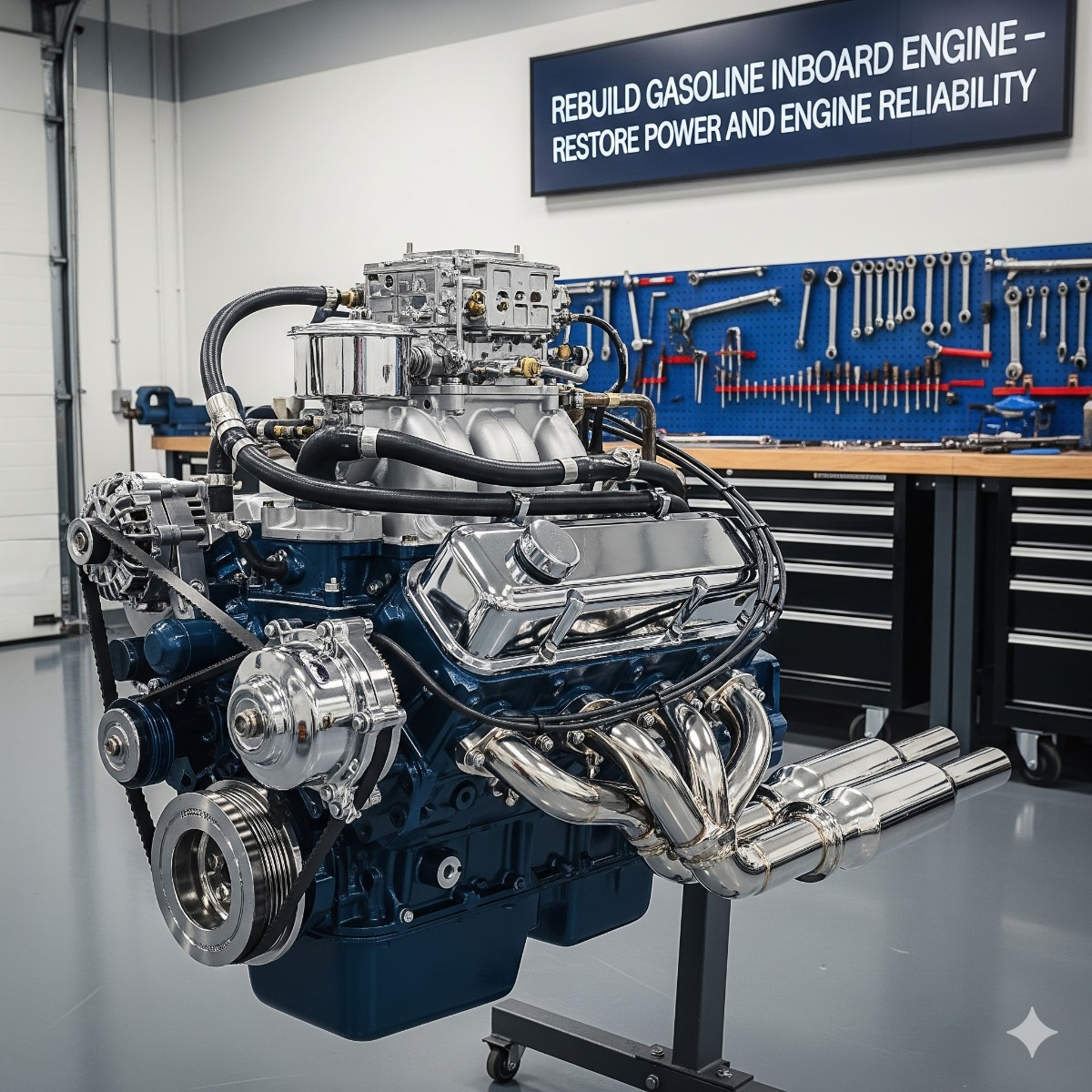
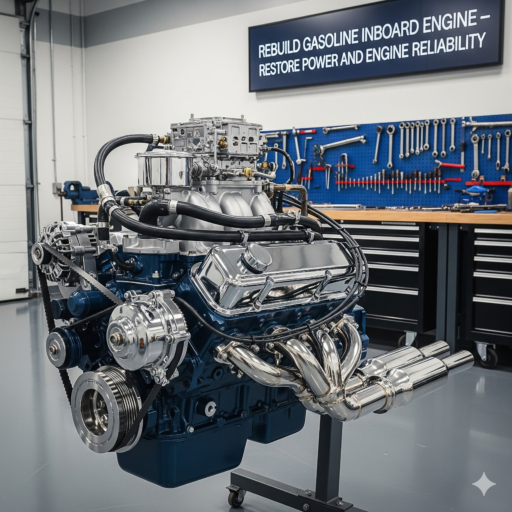
Not every weak engine needs a full overhaul. A single burned valve or failed head gasket may be addressed with a top-end job. When compression is down across several cylinders, oil use is high and hours are substantial, an inboard engine rebuild is usually the better investment. A rebuild typically includes machining or honing cylinders, new pistons or rings, bearings, gaskets and seals, reconditioned cylinder heads and a careful check of the oil pump, camshaft and timing components. While the engine is out, it is sensible to inspect the exhaust manifolds, risers, cooling system, motor mounts and coupling, since these often contributed to the wear.
Deciding whether to rebuild gasoline inboard engine assemblies or replace them depends on the condition of the block and crankshaft, parts availability for the model and how long you plan to keep the boat. A marine engine rebuild done properly can return the engine to a high-performing inboard that starts easily and runs cleanly.
Protecting Inboard Reliability After a Rebuild
- Follow the break-in procedure, varying RPM and avoiding long idling early on.
- Change oil after the initial break-in period.
- Service the raw-water impeller and check exhaust risers on schedule.
- Use fuel stabilizer when the boat sits and run the engine regularly.
These habits do more for long-term inboard reliability than almost anything else.
When to Call a Technician
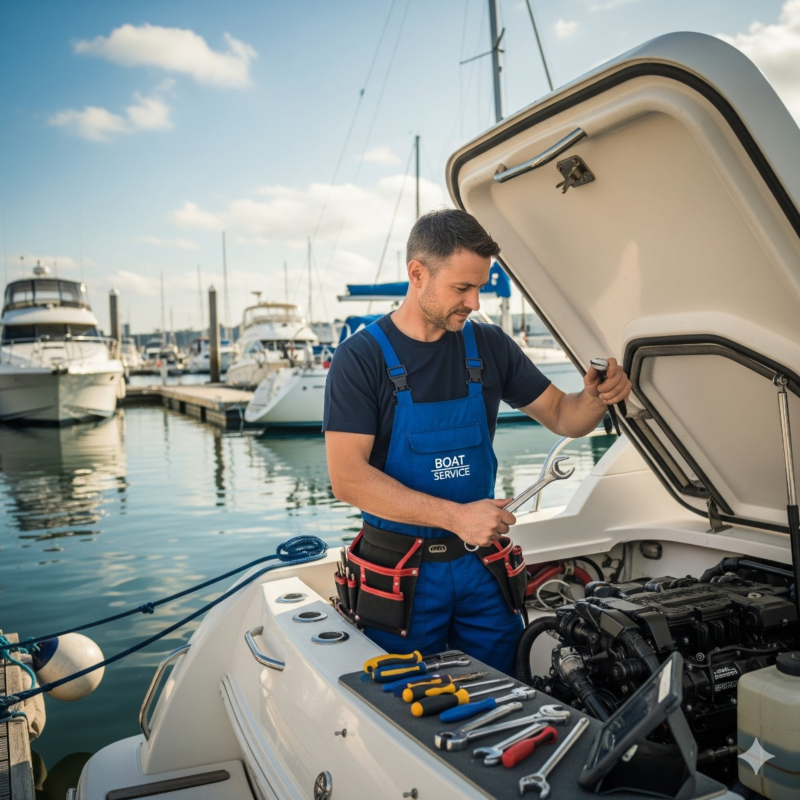
Call for help if you find milky oil, water in the cylinders, a sudden knock, or compression readings that vary widely. Plan larger work for the off-season so the boat is ready when you want to use it. Our gasoline inboard engine rebuild service starts with testing to confirm what the engine actually needs.
Inboard Rebuild FAQ
How many hours before a gas inboard needs a rebuild?
There is no fixed number. Maintenance, load, cooling system condition and how often the boat sits all matter more than hours alone. Test results are the better guide.
Can a compression test be done at the dock?
Yes. It needs access to the spark plugs and a charged battery, and results are most meaningful when the engine is warm.
Does smoke at start-up always mean a rebuild?
No. Brief smoke at start-up can be valve seals, which is a smaller job. Constant smoke with poor compression is a stronger rebuild signal.