
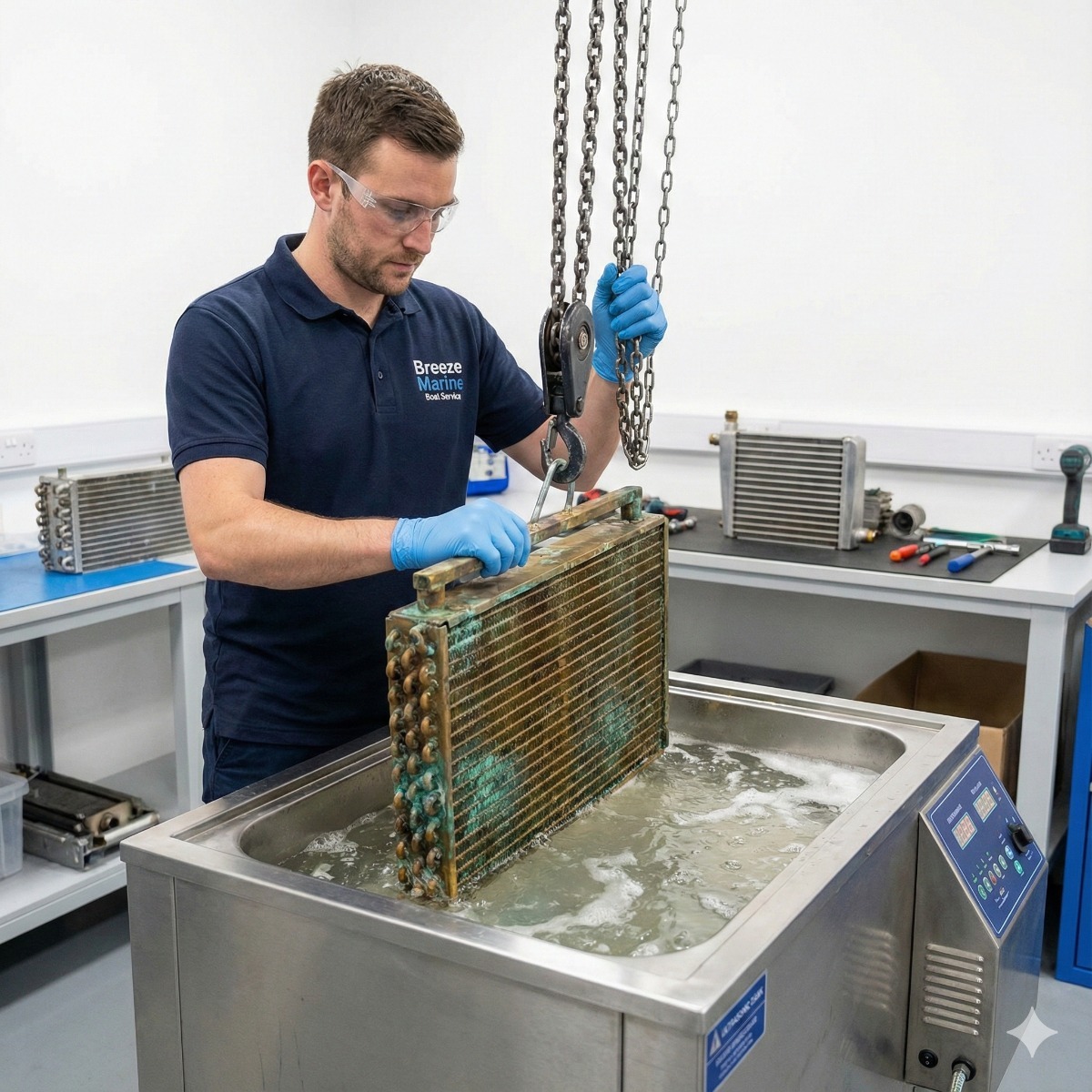
Heat Exchanger & Aftercooler Ultrasonic Cleaning
The Sound of Clean.
Marine cooling systems fail from the inside out. In a raw water cooling system, salt, scale, and growth hide where brushes can't reach. Our industrial ultrasonic technology restores heat exchangers and aftercoolers to factory efficiency.
Ultrasonic Cavitation
We use high-frequency sound waves to create millions of microscopic bubbles in a heated cleaning solution. These bubbles implode upon contact with the part, blasting away stubborn scale and salt from areas manual tools cannot reach.
The Aftercooler Risk
Aftercooler failure is catastrophic. If the internal core corrodes through, highly pressurized seawater is forced directly into your engine's intake cylinders. Regular cleaning and pressure testing are mandatory preventative maintenance that helps you avoid a major boat diesel repair.
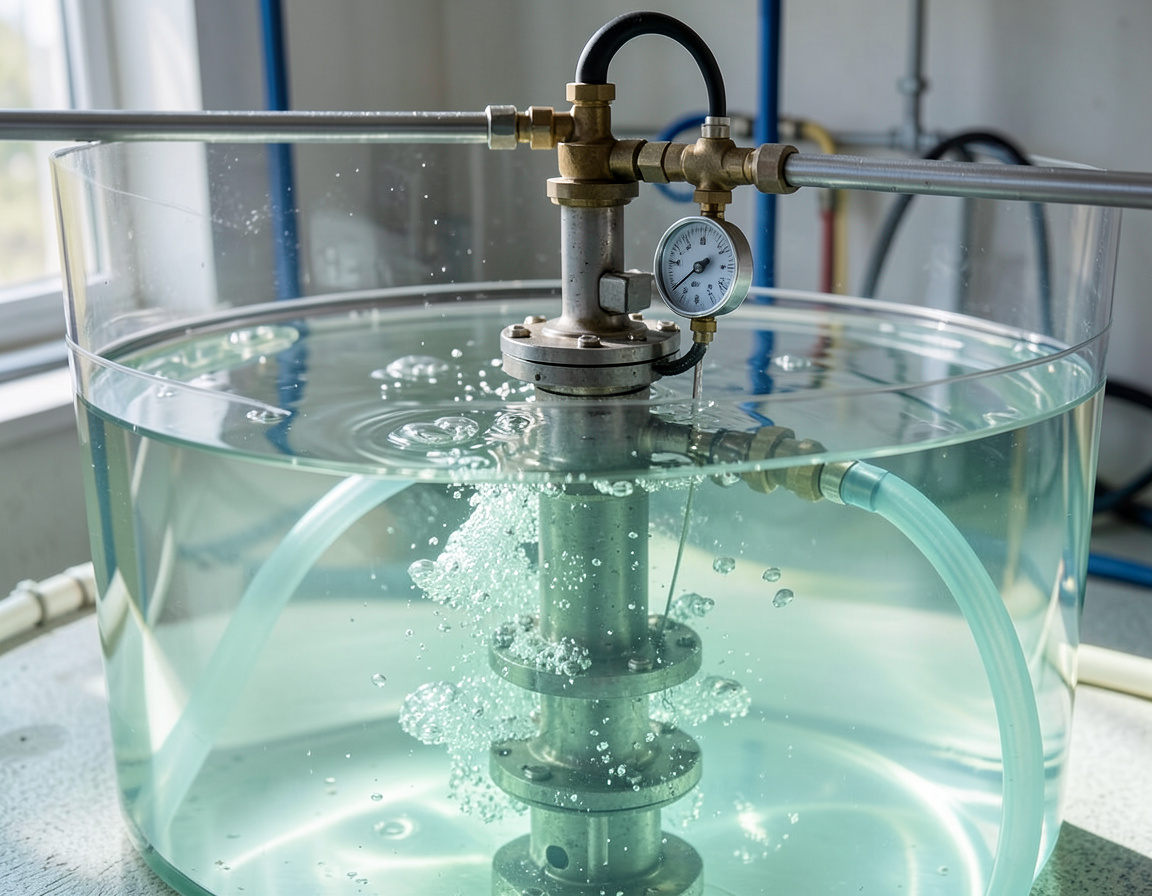
Pressure Proof
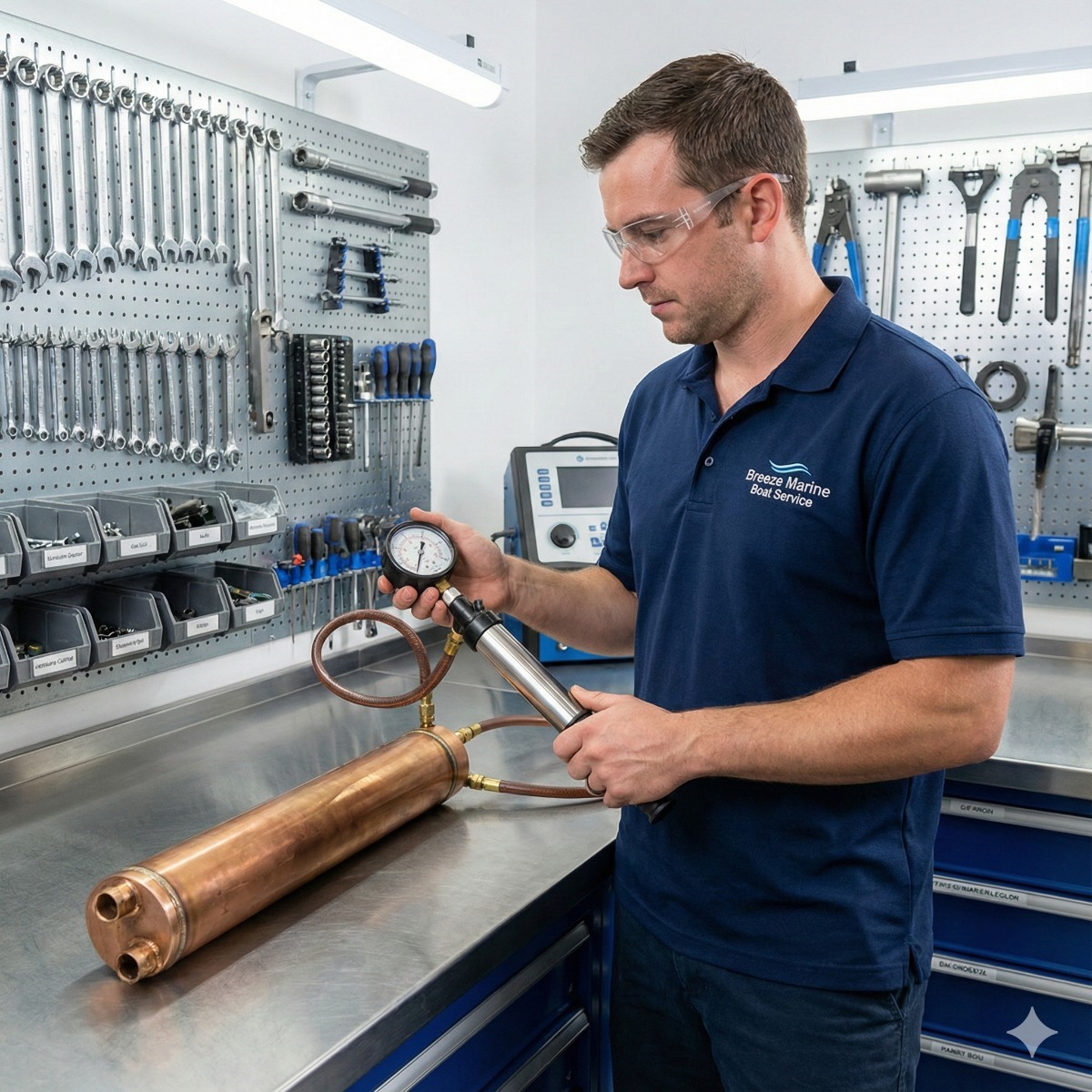
Cleaning is only half the job. After ultrasonic treatment, every cooler is reassembled with new seals and hydrostatically pressure-tested beyond operating limits to ensure there are absolutely no internal leaks.
The Lab Protocol.
A scientific approach to cooler maintenance.
Disassembly & Triage
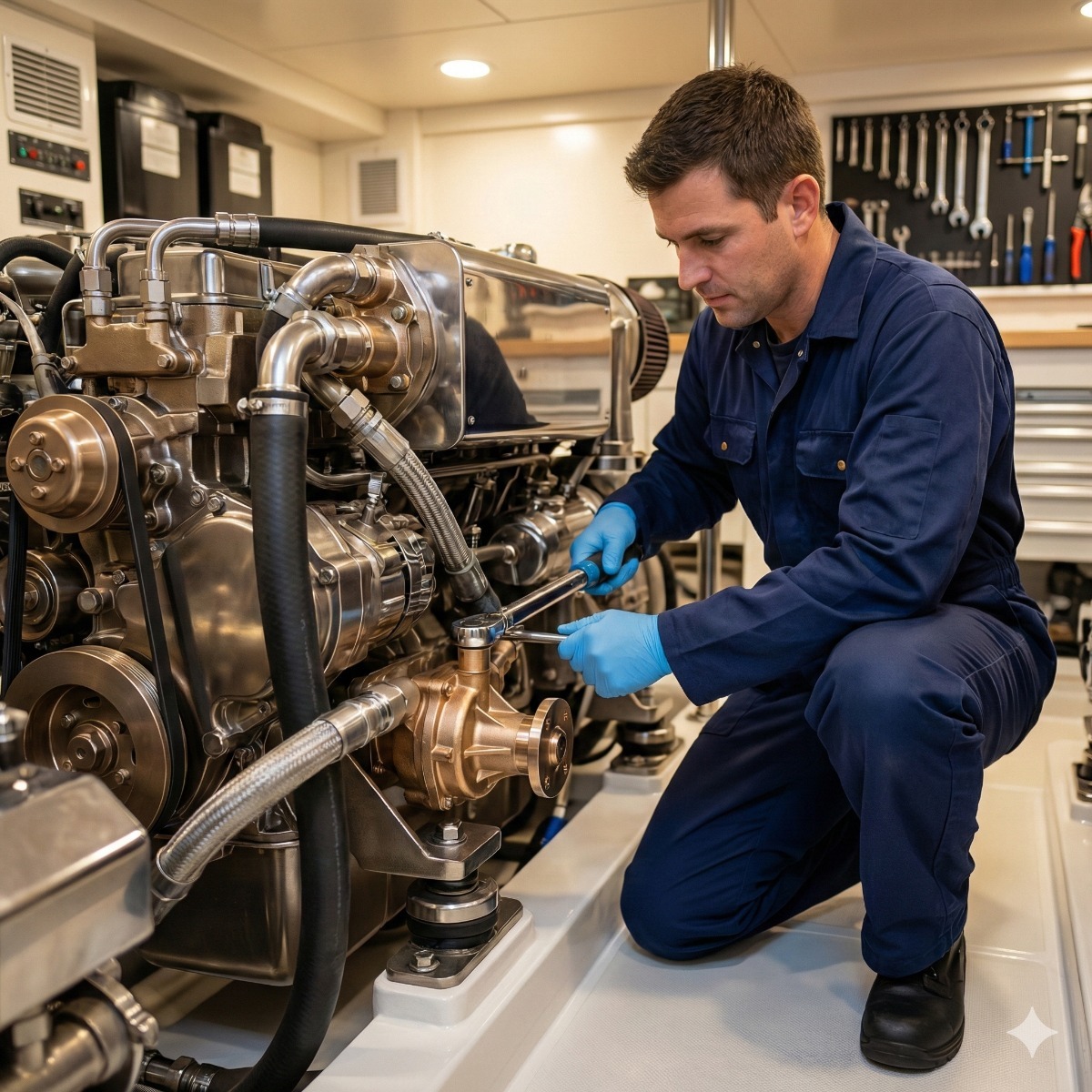
We carefully remove end caps and extract the core bundle. We inspect for obvious erosion, electrolysis, or physical damage before cleaning begins.
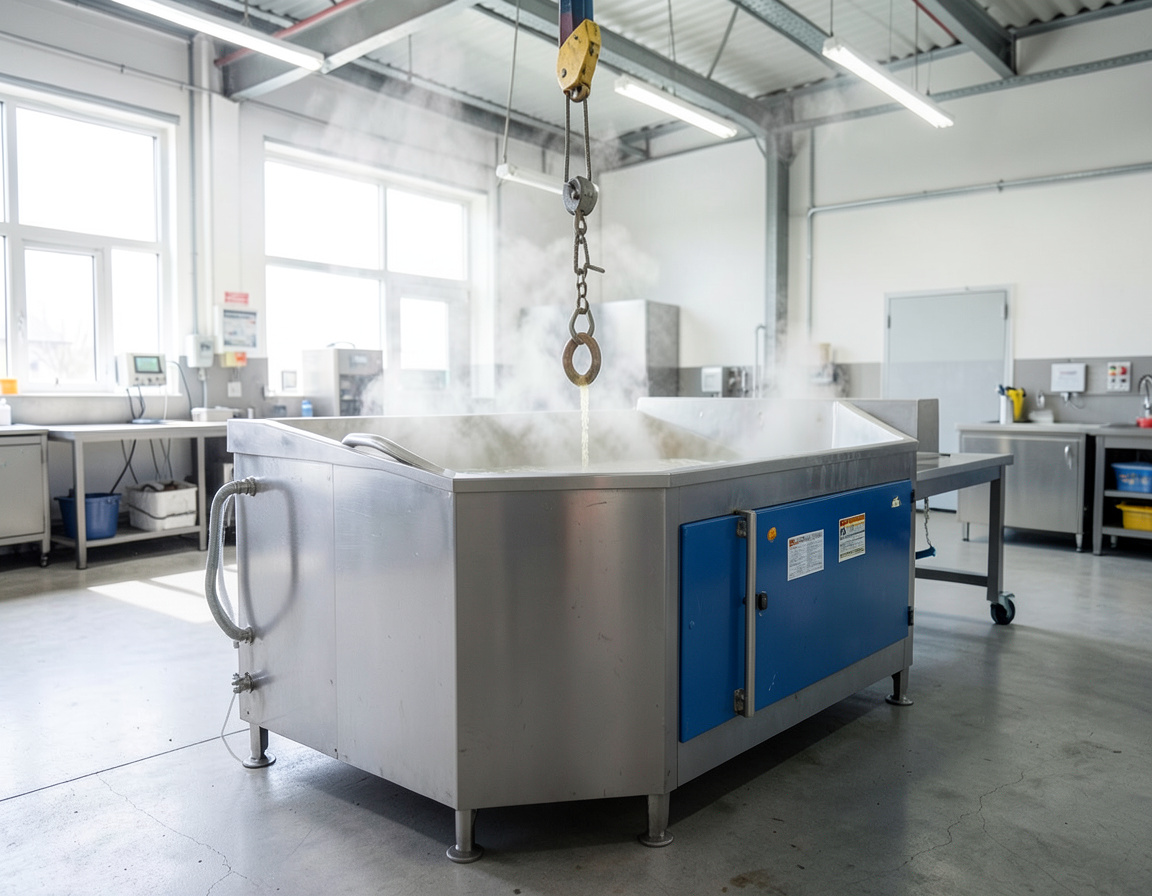
Ultrasonic Bath
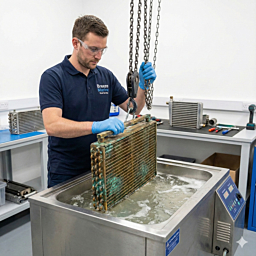
The core is submerged in our industrial ultrasonic tank filled with specialized heated chelation detergents for several hours to break down calcium and salt.
Flush & Neutralize
The core is removed and flushed with fresh water to remove loosened debris, then dipped in a neutralizing agent to protect the metal.
Pressure Test & Paint
We reassemble with new O-rings and pressure test the unit. Once passed, the exterior housing is cleaned and repainted engine color.
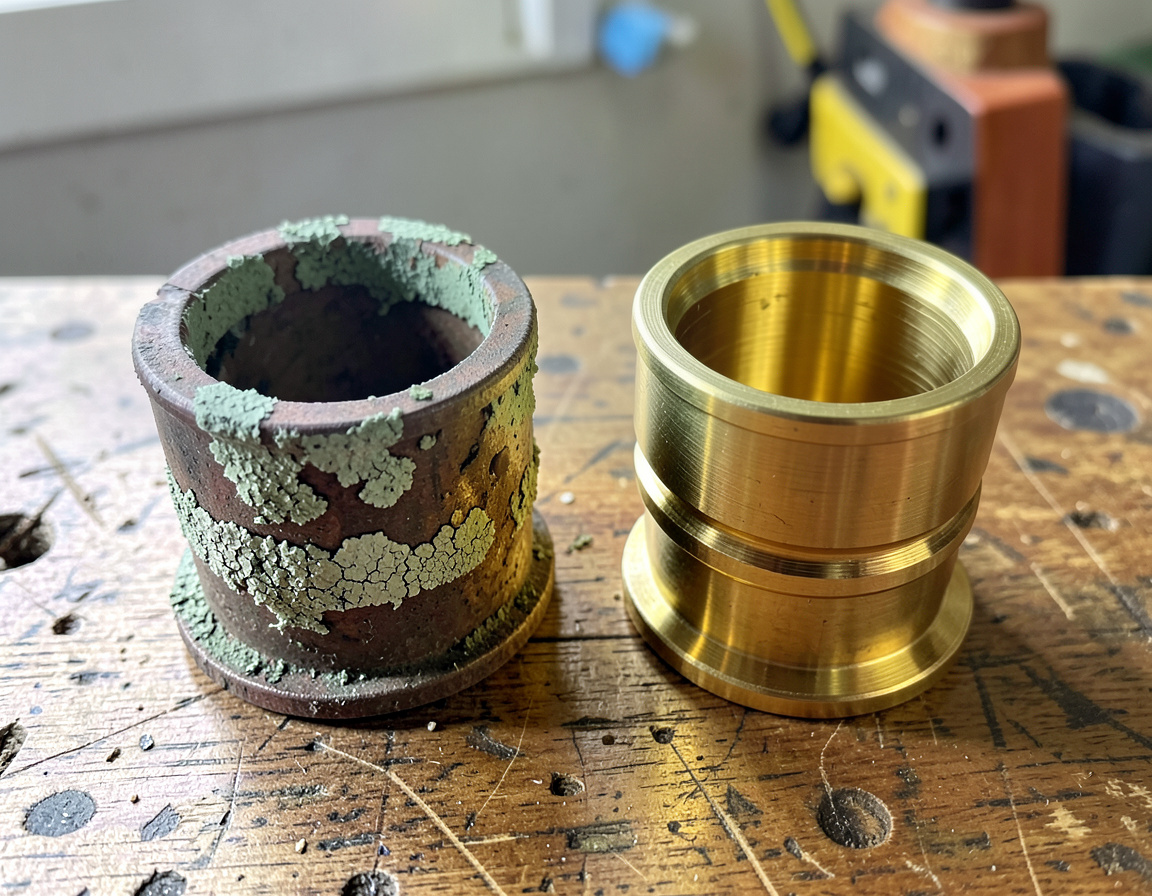
The Unseen Difference.
Restoring efficiency you can't see from the outside.
Lab Capabilities.
We service all types of marine coolers.
Common Questions
Why not just "rod out" the tubes?
Rodding only clears the straight seawater tubes. It misses the complex air fins on aftercoolers and the tight oil passages on oil coolers. Ultrasonic cleans *every* surface, inside and out.
How often should this be done?
For marine diesels in saltwater, manufacturer recommendations vary, but generally every 3-5 years or 1,000 hours is essential preventative maintenance.
Ultrasonic Aftercooler Cleaning for Marine Diesels
Ultrasonic aftercooler cleaning reaches the parts of the core that rodding cannot: the complex air fins and tight passages where salt and scale collect. We use ultrasonic cleaning for aftercooler cores because a failed aftercooler can force pressurized seawater into the engine's intake, so the core needs to be clean and proven tight before it goes back on.
An ultrasonic aftercooler clean follows our full lab protocol: disassembly and inspection, several hours in a heated ultrasonic bath, a fresh water flush and neutralizing dip, then reassembly with new O-rings and a hydrostatic pressure test before the housing is repainted. For marine diesels in saltwater, this service is generally due every 3 to 5 years or 1,000 hours, so let us know your engine model, when the coolers were last serviced and whether a marine diesel engine overhaul is planned.
Signs your coolers need cleaning
A marine diesel that runs hotter than normal at cruise, loses power or smokes more than usual may have scaled or blocked coolers, a common cause of boat engine overheating. Milky oil or oil in the coolant can point to a leaking oil cooler, and seawater in the intake is a sign of aftercooler failure.
Oil cooler cleaning, like heat exchanger and aftercooler service, is best done as preventative maintenance before these signs appear.
| Manufacturer | Breeze Marine Boat Service |
|---|

Related Posts
-


 How marine diesel coolers clog, the early signs of a clogged heat exchanger or aftercooler, what owners can check and what cleaning and pressure testing involve.