
Boat Fuel Pump Repair
Boat fuel pump repair in Long Beach and San Pedro: pressure tests, marine fuel pump replacement, fuel polishing and ethanol checks for gas and diesel boats.
- 3 services
- Labor $150/hr
- Trip fee from $30
- At your slip or in the shop
Boat Fuel Pump Repair in Long Beach and San Pedro
We diagnose and repair boat fuel pumps and fuel systems at your slip, dock or storage yard from Marina del Rey to Newport Beach, or at our San Pedro shop. That covers gasoline and diesel boats, from the tank to the engine.
What the work covers
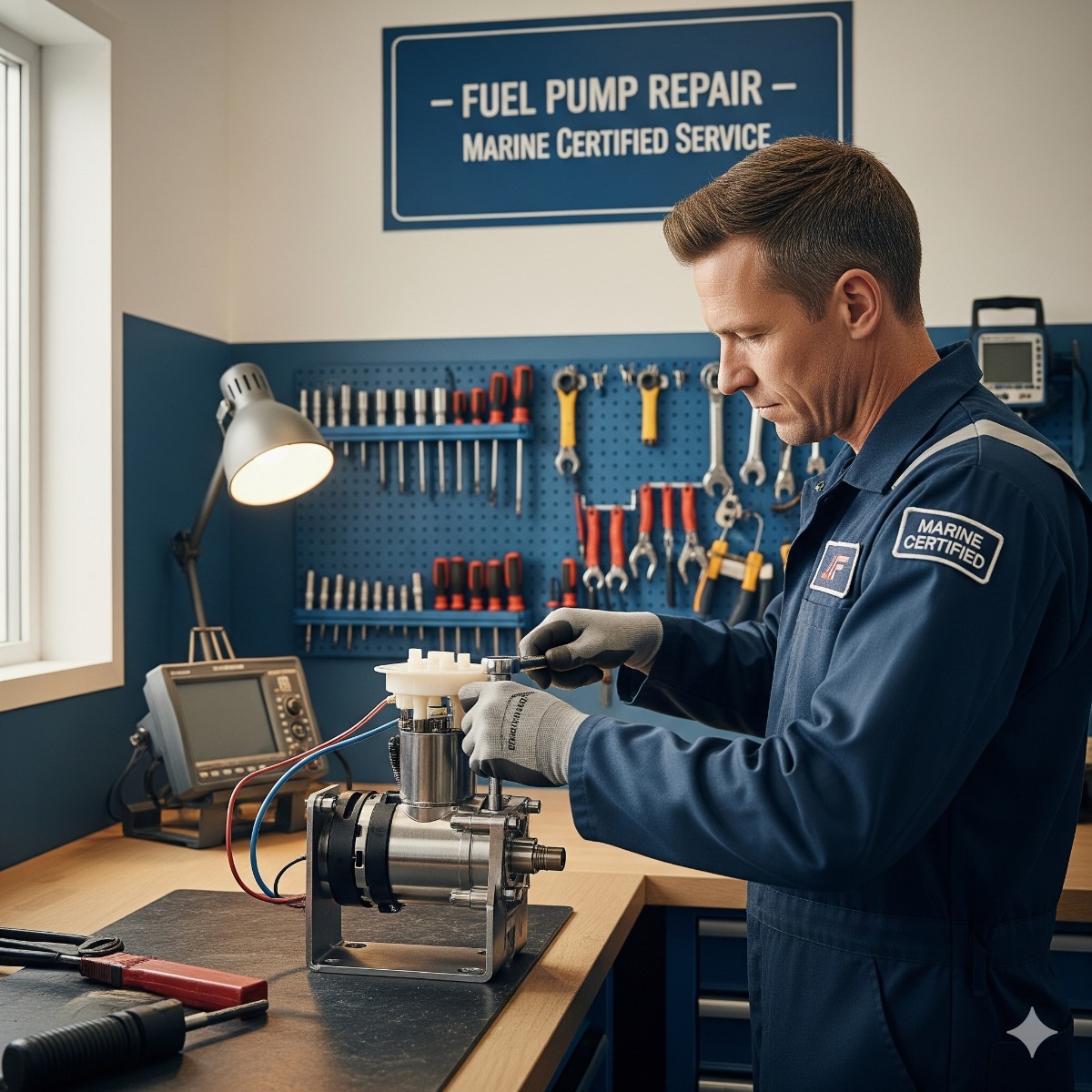
Marine fuel pump diagnostics and replacement starts with tests of fuel pressure, the pump's electrical supply and the fuel path, so a good pump is not replaced by mistake. On gasoline boats we fit marine, ignition-protected pumps only, never automotive ones. Parts are quoted with the job.
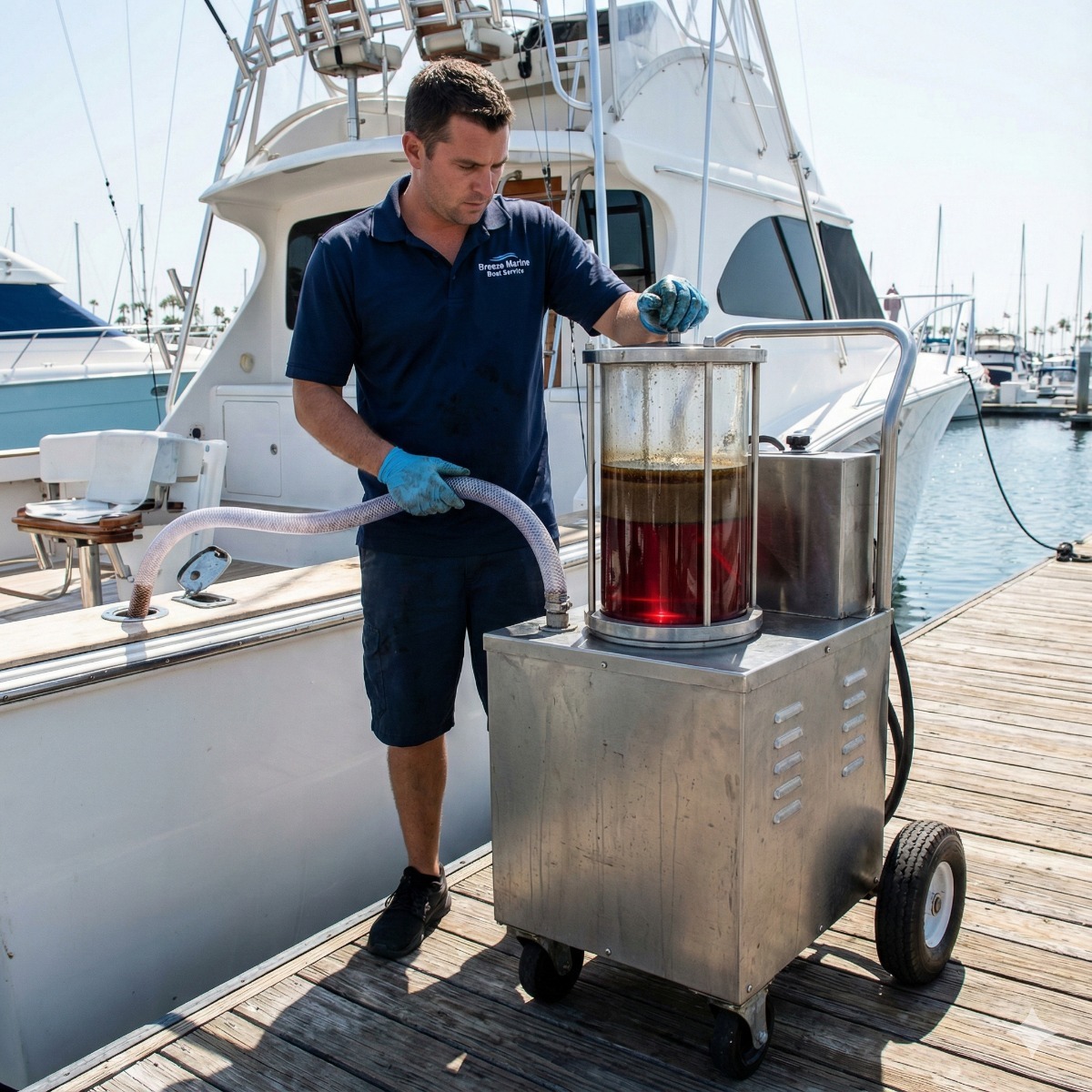
Fuel polishing and micro-filtration cleans the fuel in the tank, removing the water, sludge and growth that keep plugging filters. It helps most on diesel tanks and on boats that sit.
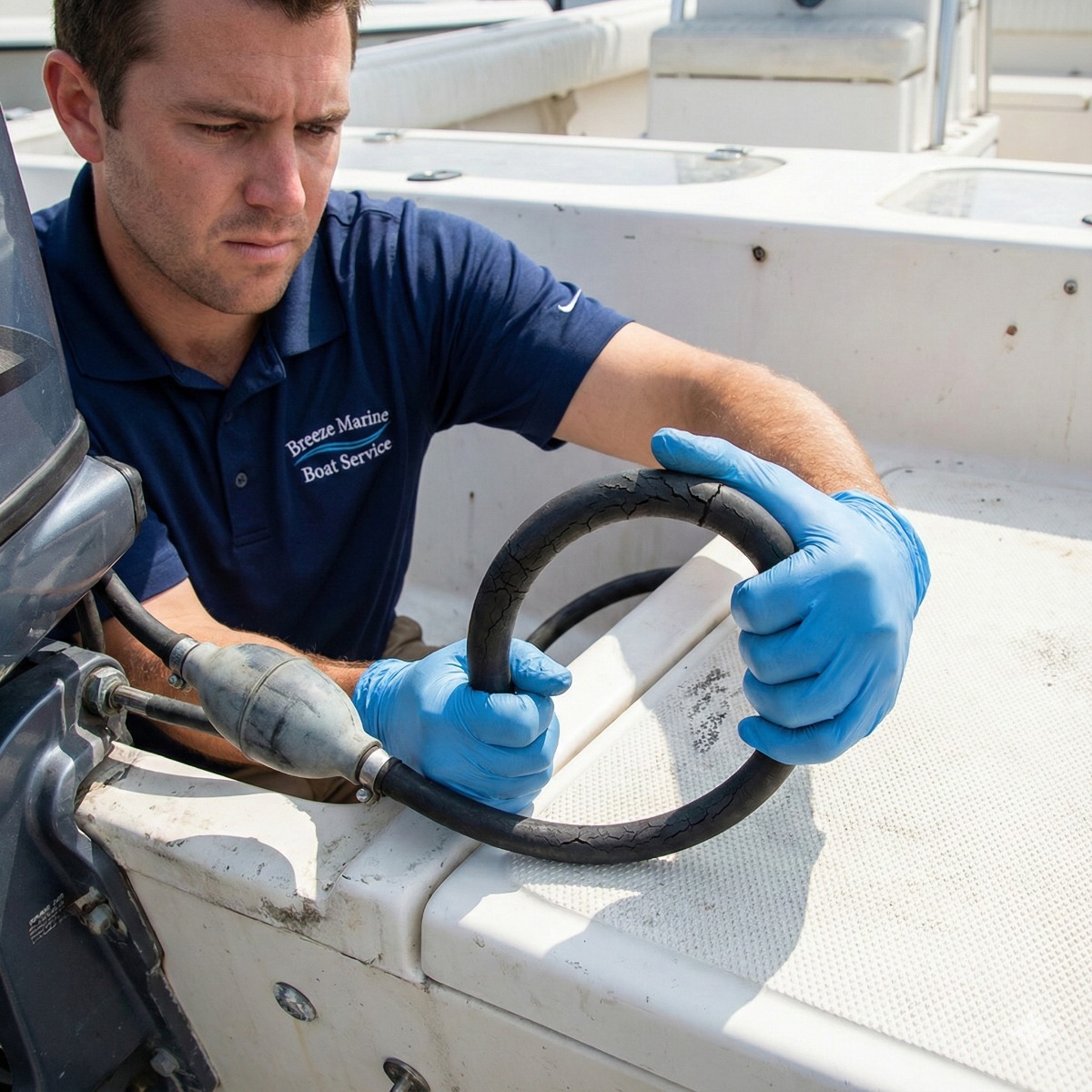
Marine fuel system safety and ethanol defense is an inspection of fuel lines, primer bulbs and fittings, with steps against ethanol damage.
If fuel reaches the engine and it still runs poorly, see carburetor repair and injector repair.
When to call
- The engine starts and then dies, or loses power at higher speed
- Hard starting after the boat has sat
- A primer bulb that will not firm up, or one that is cracked
- Water or dirt in the fuel filter bowl
- A fuel smell in the bilge or engine compartment. Leave the engine off until the leak is found, and air out the boat.
Questions about boat fuel pumps
Why does my engine lose power at higher speed?
Fuel starvation is a common cause: a clogged filter, a pinched line, a stuck anti-siphon valve or a blocked tank vent. On an outboard, if the engine picks up when you squeeze the primer bulb, look at the fuel supply first.
Why does ethanol fuel cause trouble in boats?
Ethanol blends take on water from damp air, and fuel that sits can separate or go stale. Older fuel hoses and primer bulbs can also soften or crack. Fresh fuel, a water separating filter and regular use all help.
Book a visit: submit a ticket with the boat, the engine, where it is kept and what it is doing, or call (562) 542-7296.
-

#740 Common question asks
Do you provide recommendations to maintain clean fuel between services?
-
Yes. Buy fuel from busy docks, keep a water-separating filter in the line and check its bowl, and before a long layup fill the tank nearly full (leave room for expansion) and add a fuel stabilizer, or a biocide for diesel when needed. A full tank leaves less air space, so less condensation forms.
-
-
#738 Common question asks
Is the fuel polishing service safe for all types of marine fuel?
-
Our polishing is for diesel, including biodiesel blends; it works on the tank and does not touch the engine's pumps or injectors. Gasoline that has gone stale or phase-separated is drained and disposed of rather than polished. Polishing cannot restore fuel that has aged, and badly contaminated diesel may still need to be replaced.
-
-
#736 Common question asks
Do you offer fuel system inspection along with polishing?
-
Yes. We check the fuel lines, fittings, filters and water separator while we are there. Anything worn or leaking goes on the written estimate, and we replace it only with your OK.
-
-
#734 Common question asks
Can fuel polishing prevent engine problems?
-
It can prevent many fuel-related problems. Removing water, sludge and microbial growth before they reach the engine lowers the risk of fuel starvation, clogged filters and injectors, and rough running. It does not fix mechanical faults or restore fuel that has aged.
-
-
#732 Common question asks
What is included in your fuel filtration service?
-
The service includes polishing the fuel in a closed loop to remove water and sediment, checking and replacing the fuel filters, and checking the fuel lines and connections. We report anything worn or leaking and quote it before any extra work.
-
-
#730 Common question asks
How often should I have my fuel tank polished and filtered?
-
It depends on how long fuel sits, not on engine hours. Book polishing when filters clog quickly, the water separator bowl shows water or sludge, or the boat has sat for months, especially with diesel, where microbes grow at the fuel-water line. Boats that sit for long periods in warm weather need it more often.
-
-
#728 Common question asks
Why is fuel tank polishing important for my boat?
-
Polishing removes water, sediment and microbial sludge that build up while fuel sits in the tank. That helps keep filters and injectors from clogging and protects the rest of the fuel system.
-
-
#726 Common question asks
How often should fuel lines and primer bulbs be inspected or replaced?
-
We recommend inspecting fuel lines and primer bulbs annually or anytime you notice fuel odor or engine performance issues. In saltwater environments like Newport Beach and Long Beach, replacement is often needed every 3–5 years depending on usage and fuel type.
-
-
#724 Common question asks
Do you replace fuel lines and primer bulbs during the inspection if needed?
-
Yes. If we find unsafe or worn parts, we give you a written estimate, and once you approve it we replace the fuel lines and primer bulbs with marine-grade, ethanol-resistant hose and fittings. Replacement hose is USCG Type A1-15, and the installation follows the engine maker's instructions and ABYC practice.
-
-
#722 Common question asks
Can a bad primer bulb cause engine stalling or hard starting?
-
Yes. A failing primer bulb can let air into the fuel system, causing fuel starvation, rough running, hesitation or stalling, especially at higher RPMs. Replacing a faulty primer bulb often fixes these problems.
-