
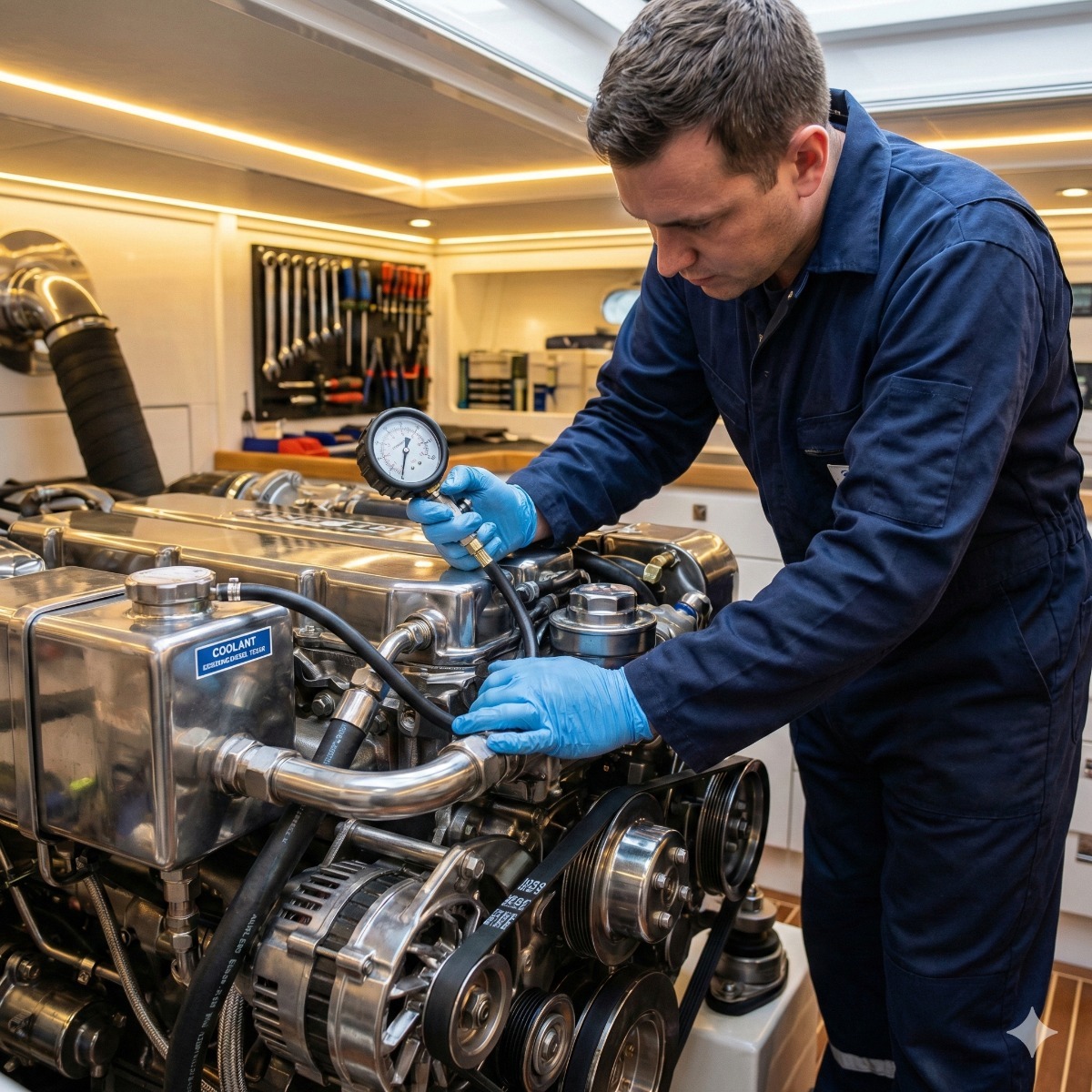
Cooling System Pressure Testing
Find the Invisible.
Prevent the Inevitable.
Losing coolant but can't see a leak in the bilge? We use specialized hydrostatic pressure testing to pinpoint microscopic breaches in your heat exchanger, hoses, and block before they cause catastrophic boat engine overheating offshore.
Micro-Leak Detection
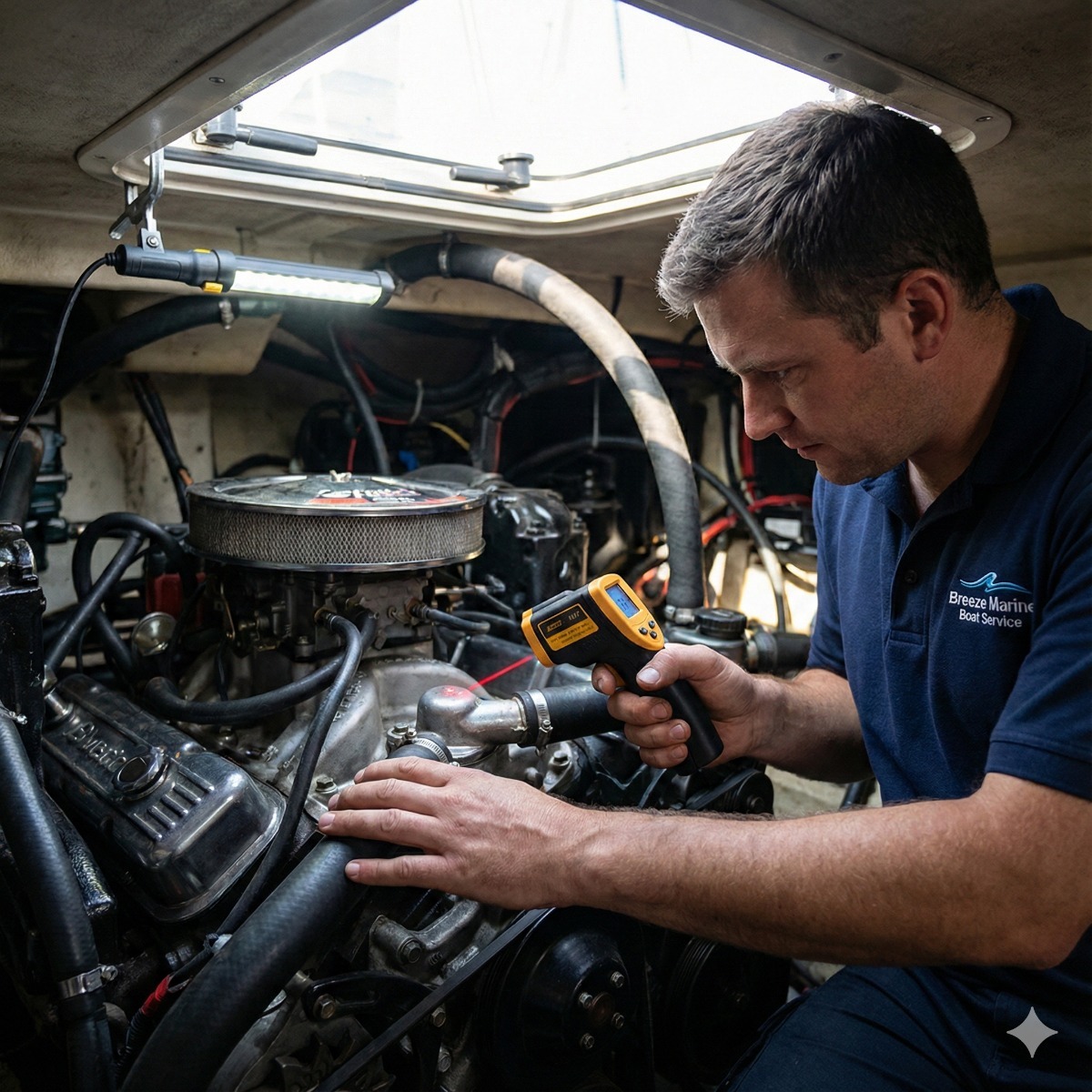
Some leaks only occur when the engine is under load and at operating temperature. We artificially pressurize the cold system to simulate these conditions, forcing hidden leaks in hoses and clamps to reveal themselves instantly.
Heat Exchanger Integrity
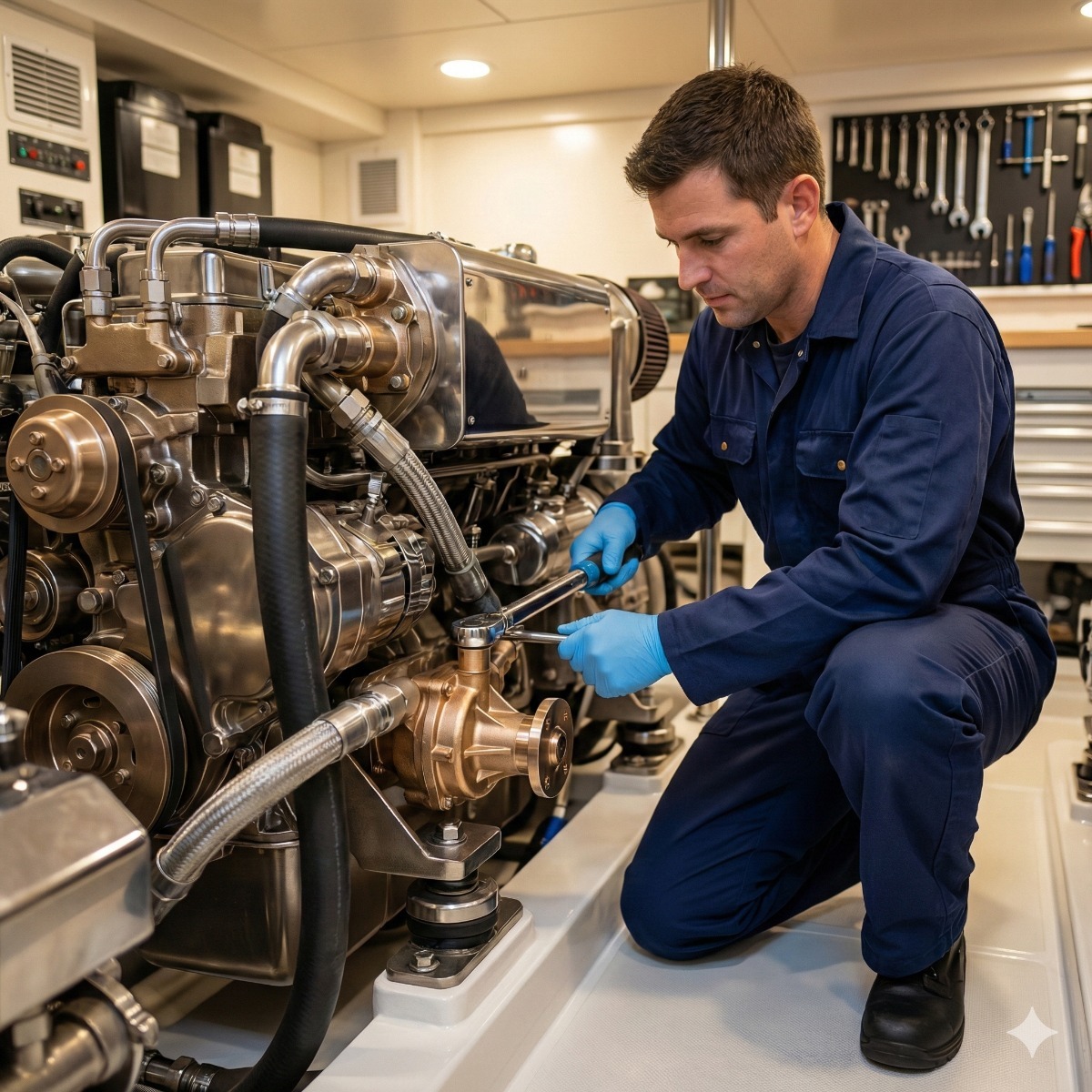
If the pressure gauge drops but there's no visible water outside the engine, your heat exchanger core may have failed. This kind of heat exchanger leak means you are pumping precious antifreeze directly out the exhaust with the raw water.
Cap Calibration Check
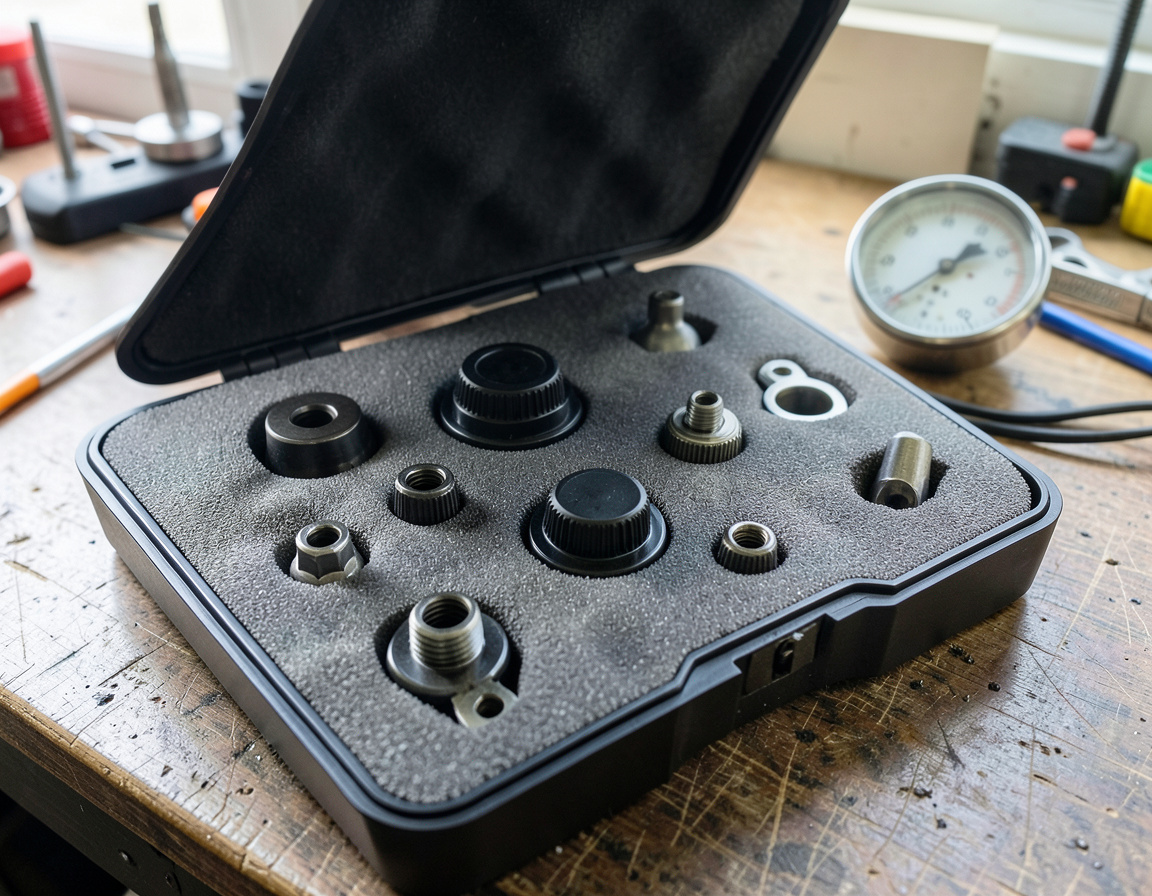
A faulty radiator cap lowers the boiling point of your coolant. Our radiator cap pressure test checks the relief valve independently to ensure it is holding the exact OEM PSI rating required to keep your engine running cool.
The Diagnostic Protocol.
Data-driven analysis.
Cold System Prep
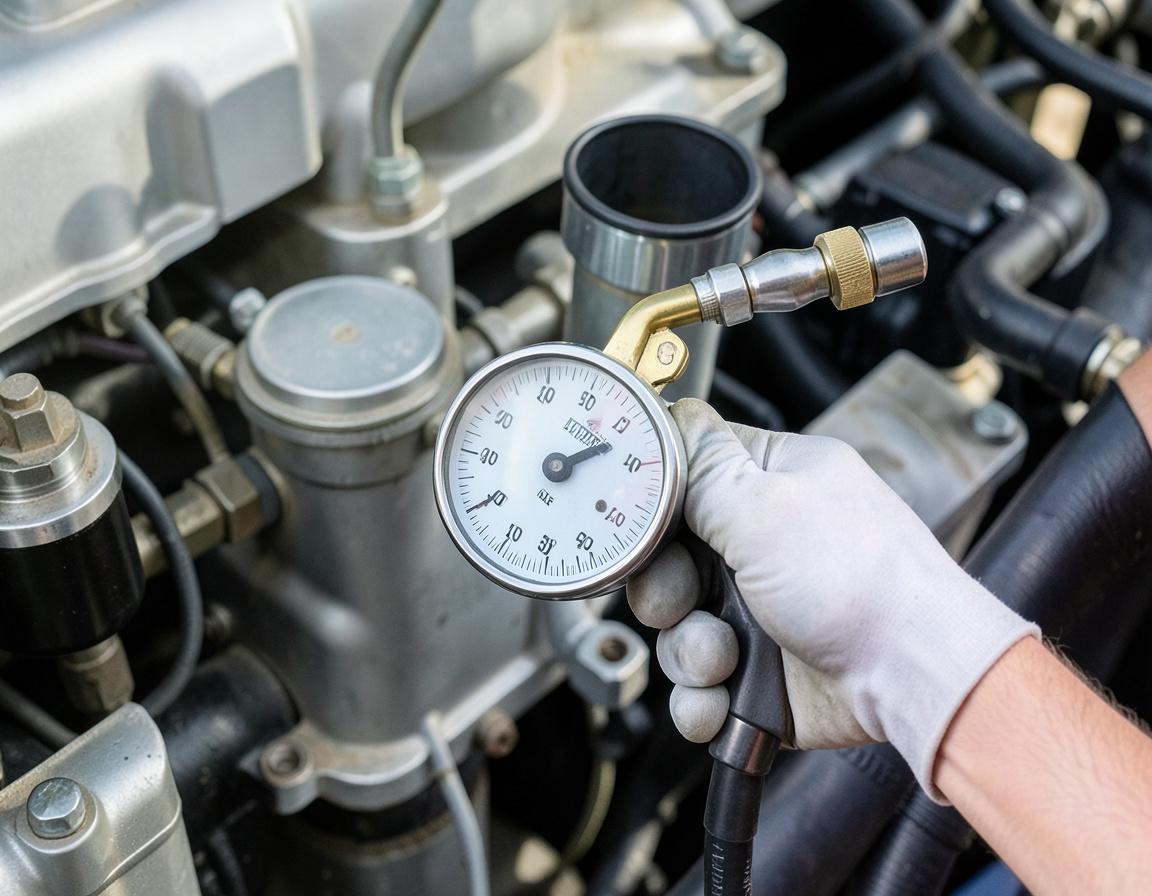
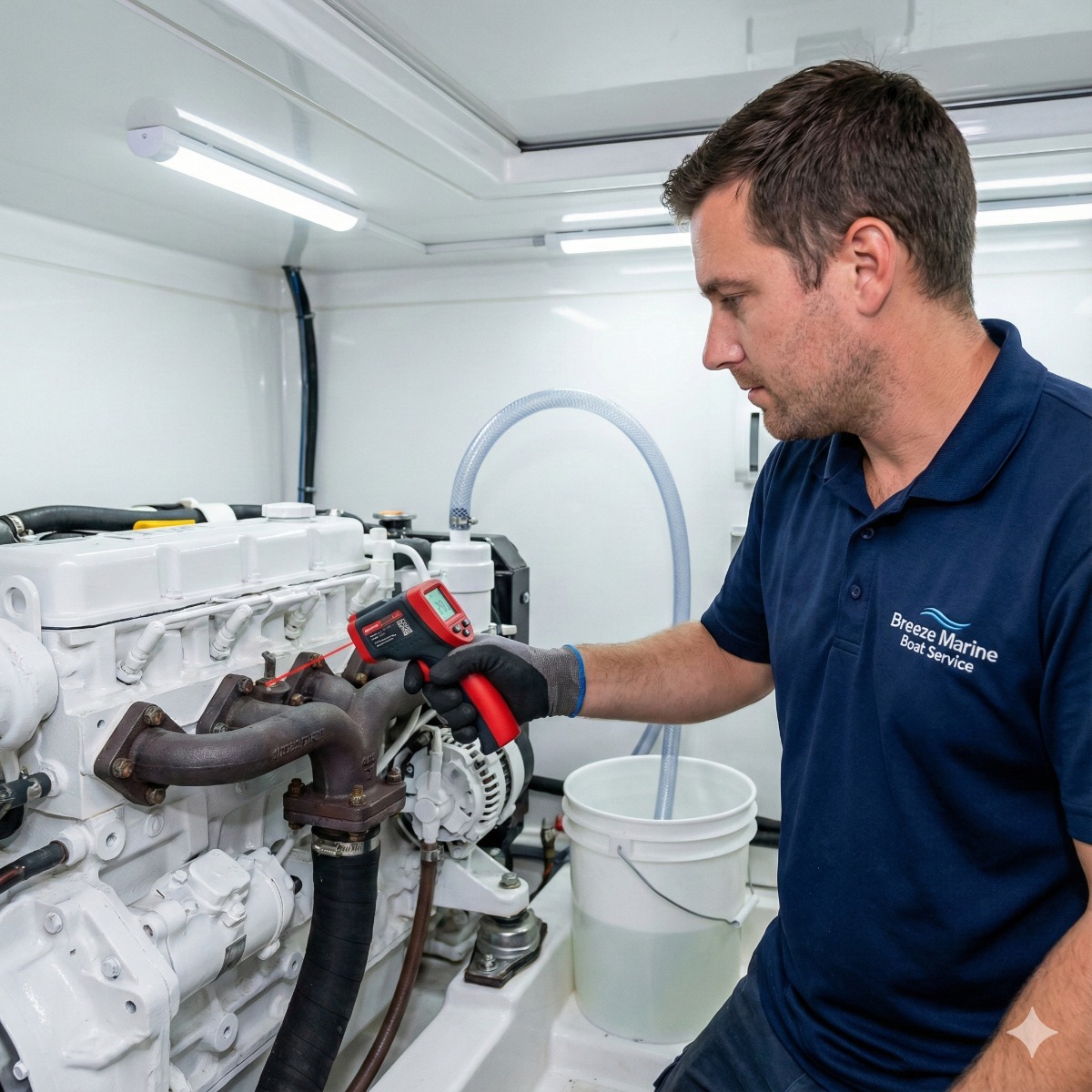
Testing must be done on a cold engine. We remove the expansion tank cap and securely attach the precision analog or digital pressure testing manifold.
Static Pressurization
We pump the closed-loop system up to the manufacturer's specified pressure (typically 14 to 16 PSI) to simulate standard operating load conditions.
Gauge Monitoring
The system is left to hold pressure for 15-30 minutes. A steady needle means a healthy system. Any pressure drop indicates a breach that needs to be tracked down.
Visual & Dye Trace
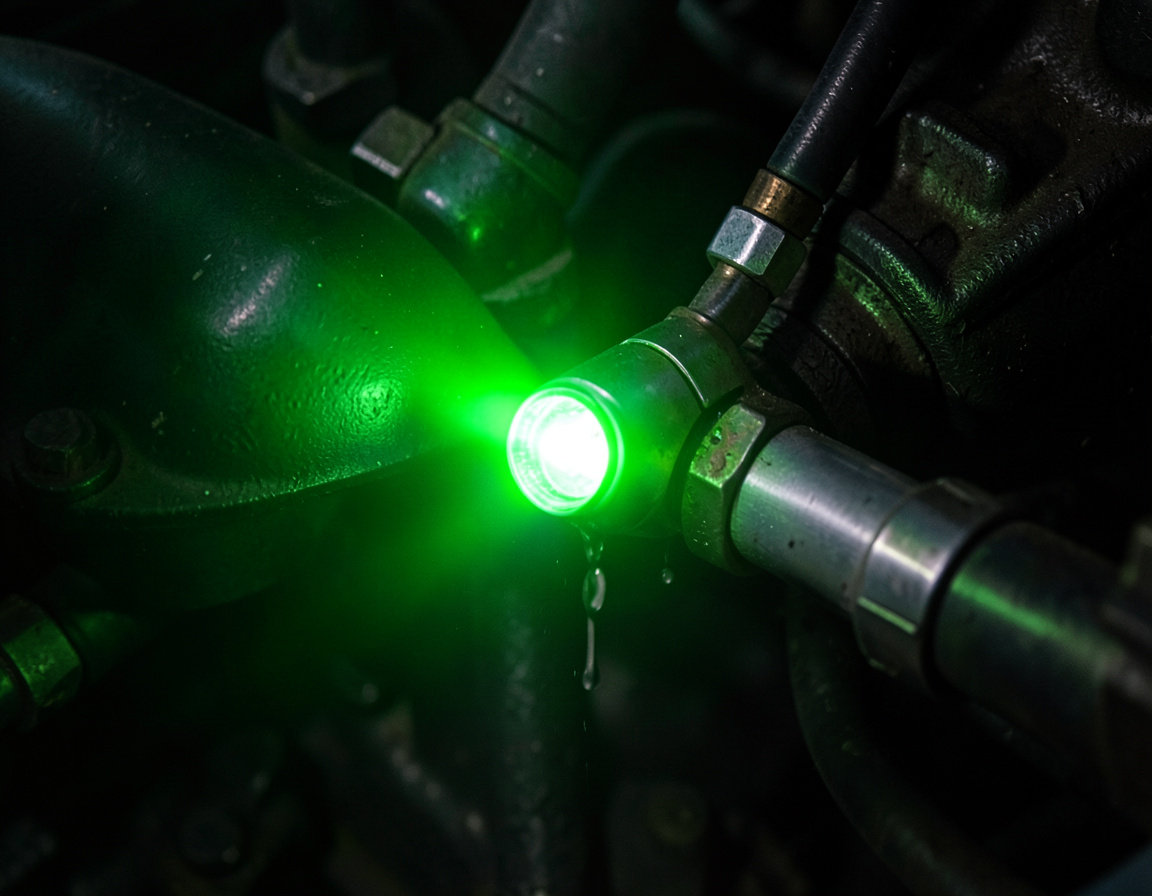
If the pressure drops, we perform a thorough visual inspection of all joints, water pumps, and hoses. If necessary, UV fluorescent dye is introduced to trace microscopic weeping.
Diagnostic Equipment.
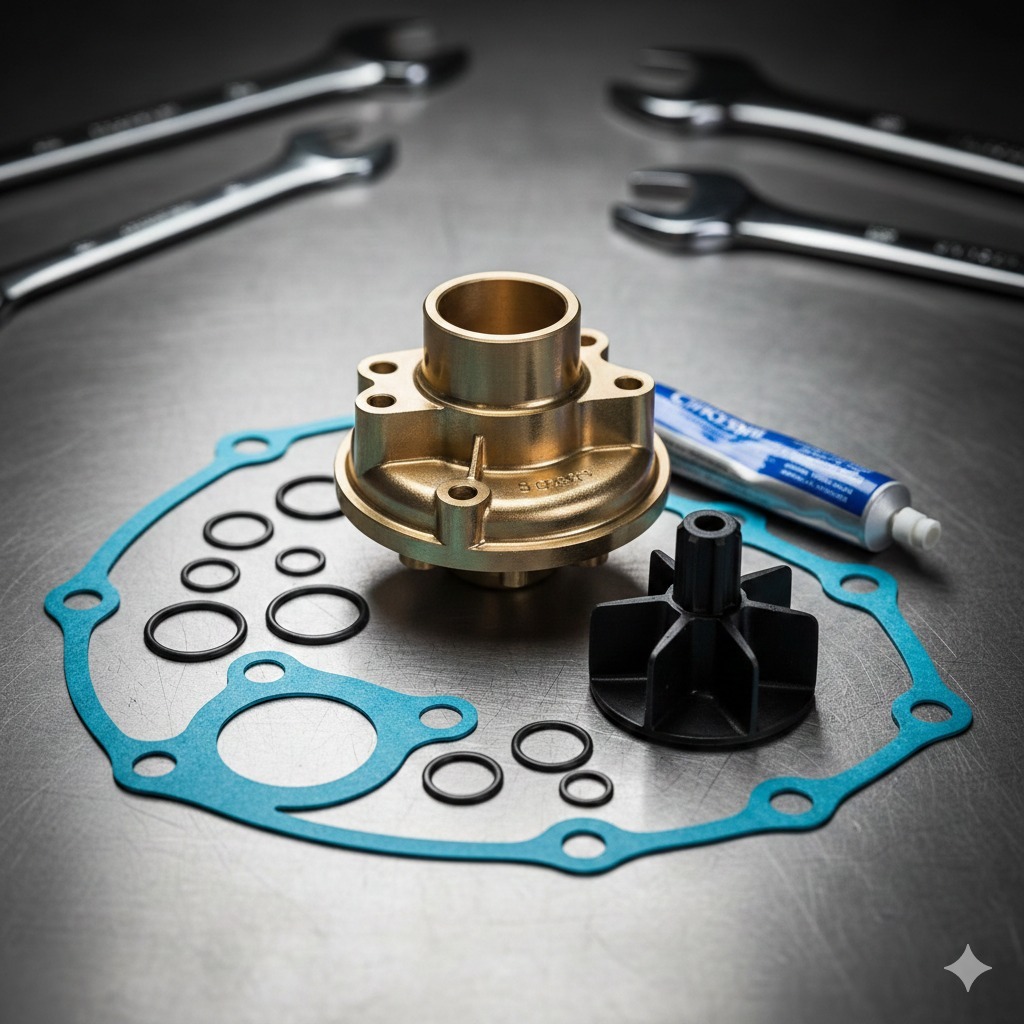
Professional grade tools.
Technical Specs.
Testing parameters.
Common Questions
I have to add coolant every month, but my bilge is dry. Why?
You likely have an internal coolant leak. A breached heat exchanger will leak coolant into the raw water side, where it gets harmlessly pumped out the exhaust with no trace left in the boat.
Can a bad cap really cause an overheat?
Yes. The pressure cap raises the boiling point of the coolant. If the spring in the cap gets weak, the system loses pressure, the coolant boils at a lower temperature, and your engine overheats under heavy load.
| Manufacturer | Breeze Marine Boat Service |
|---|

Related Posts
-


 If you keep topping up coolant but never see a drip, the leak may be hidden. Learn how pressure testing, cap checks and UV dye find it before overheating.